
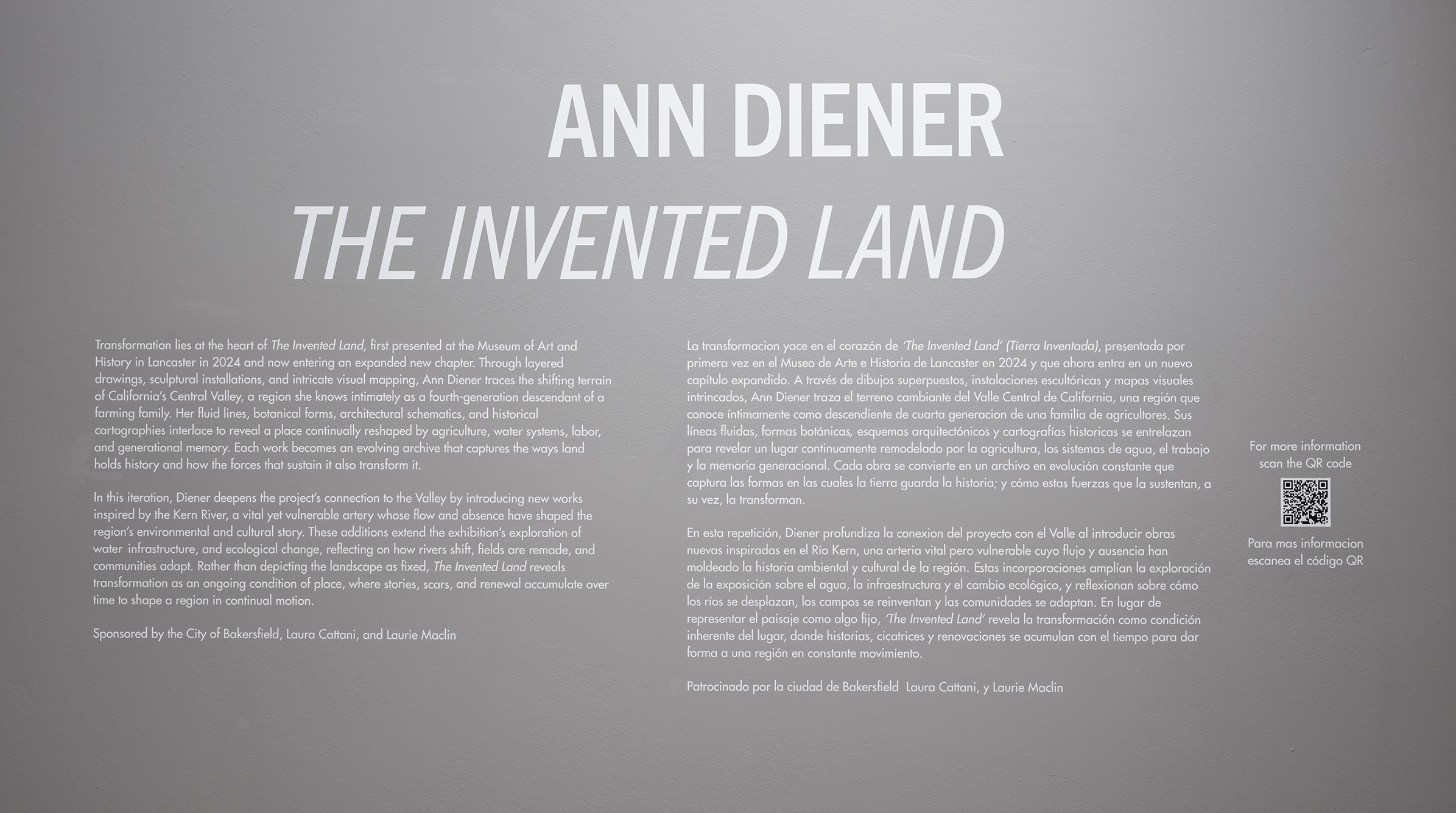
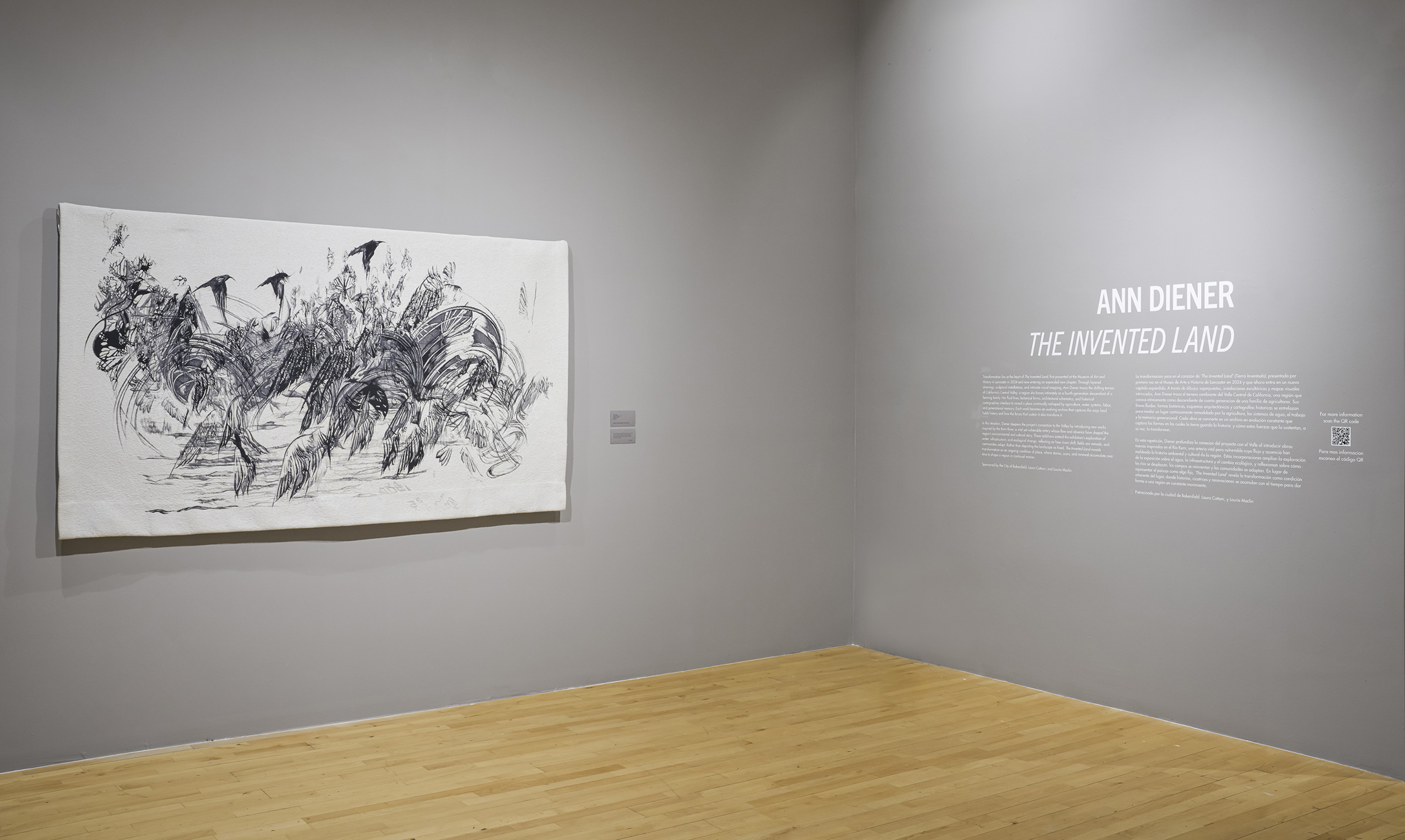
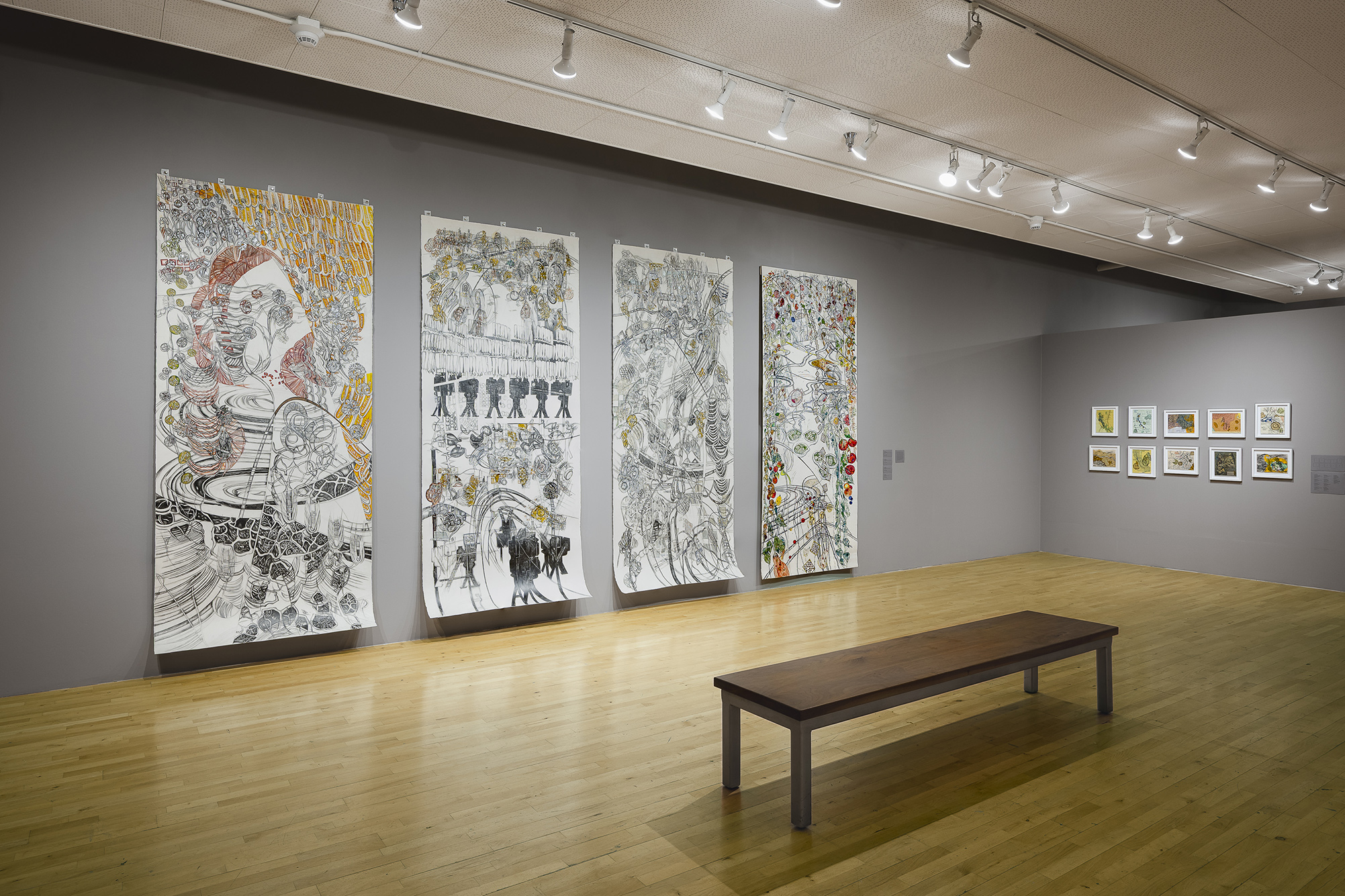
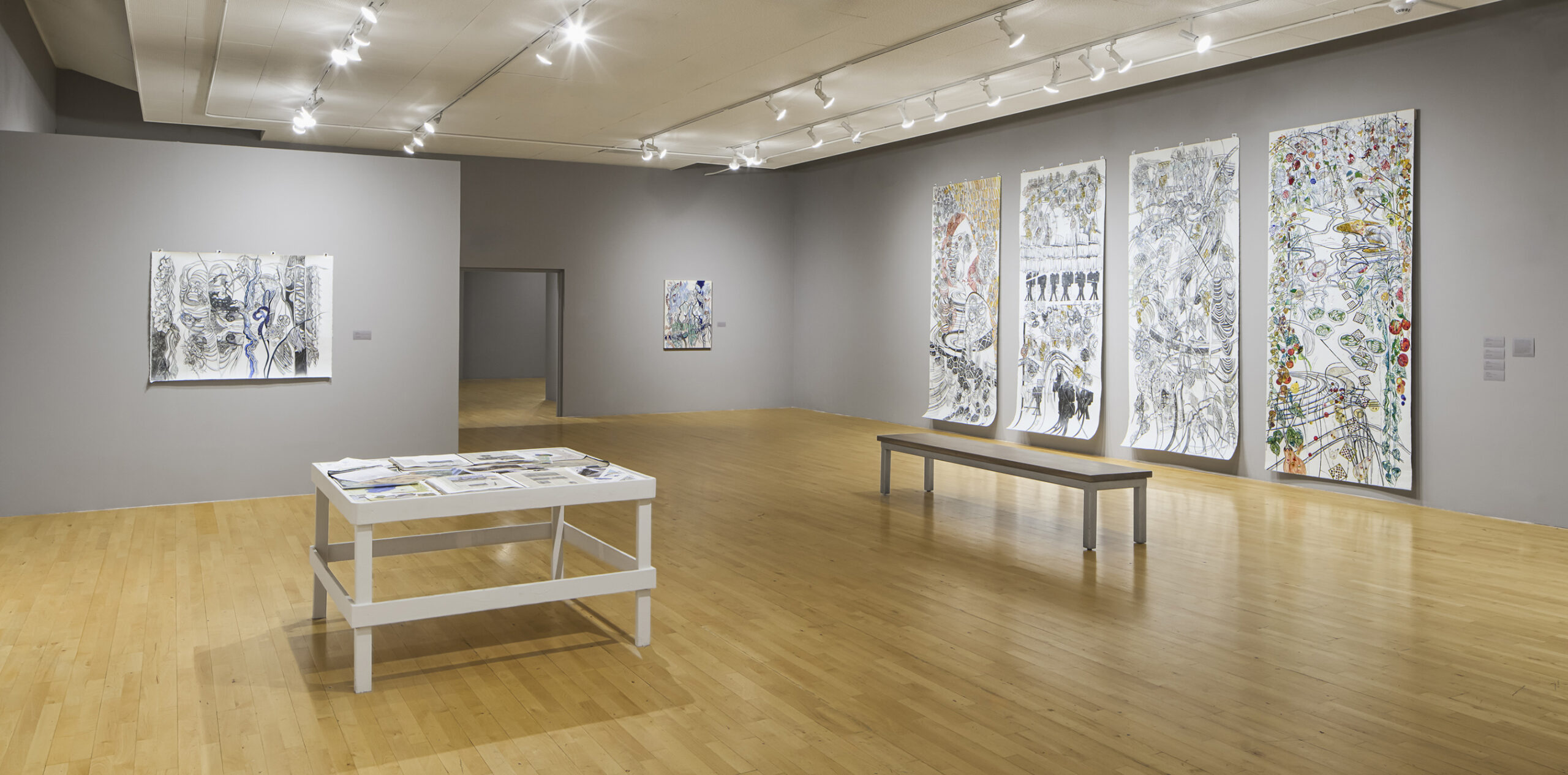
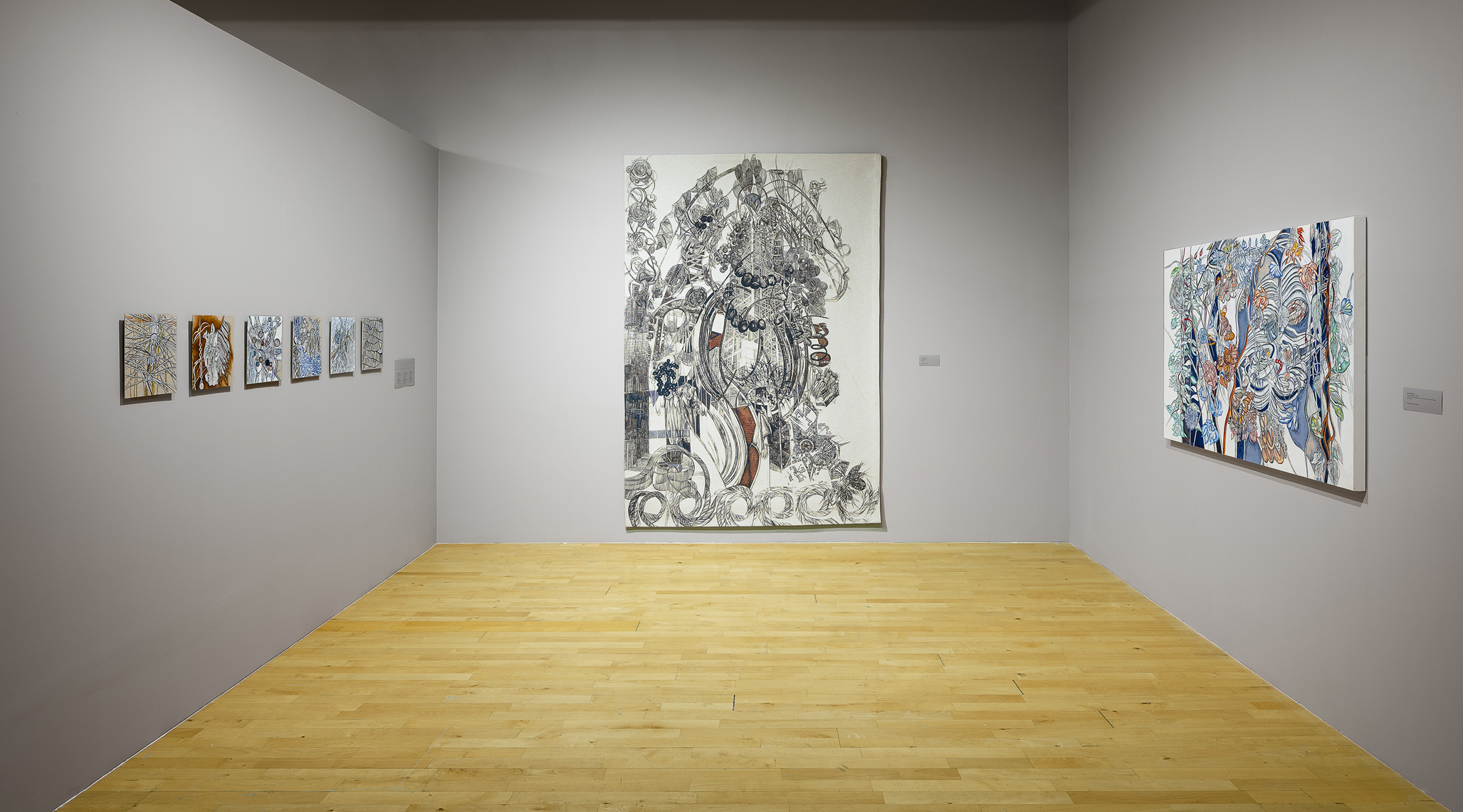
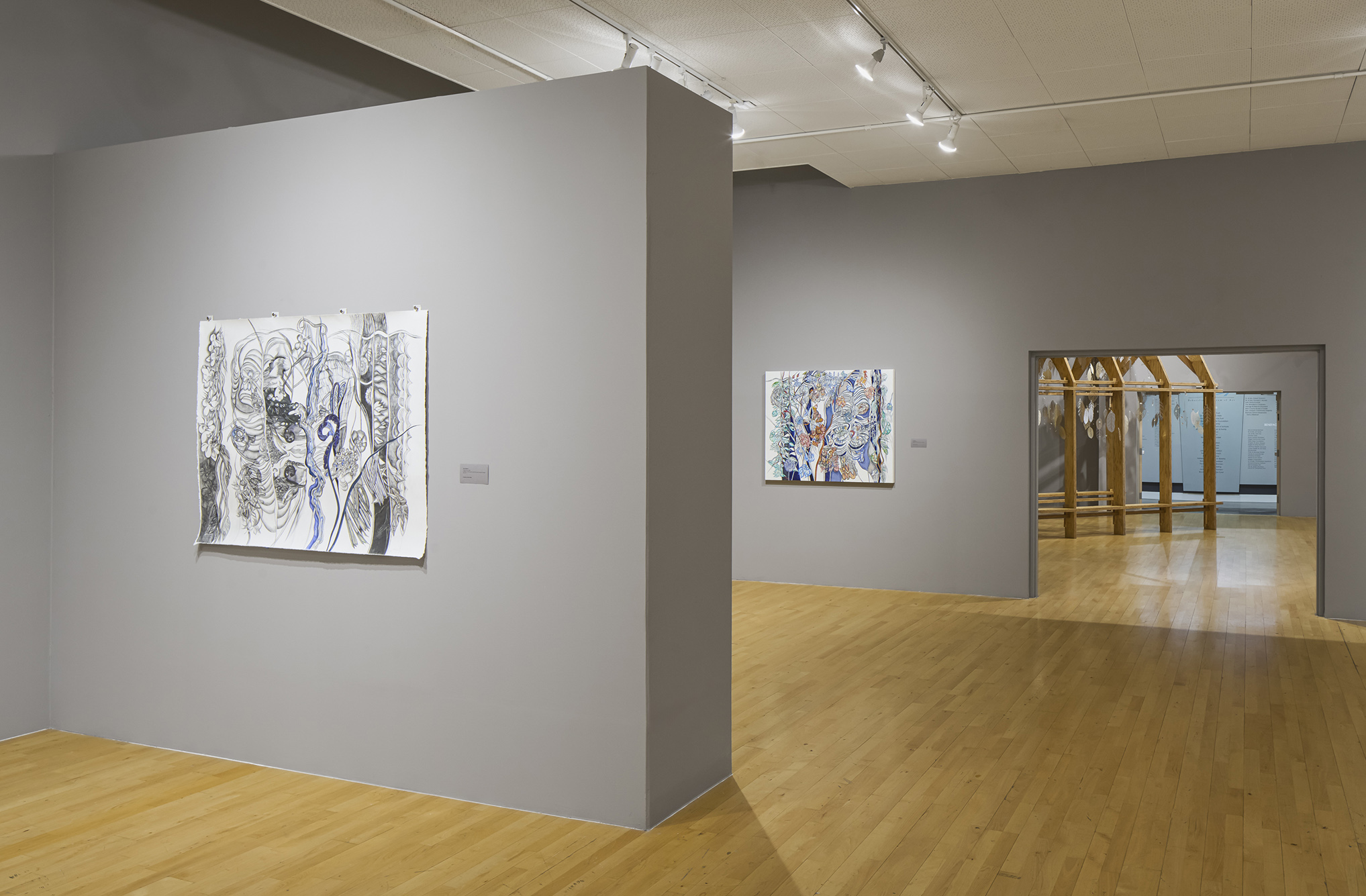
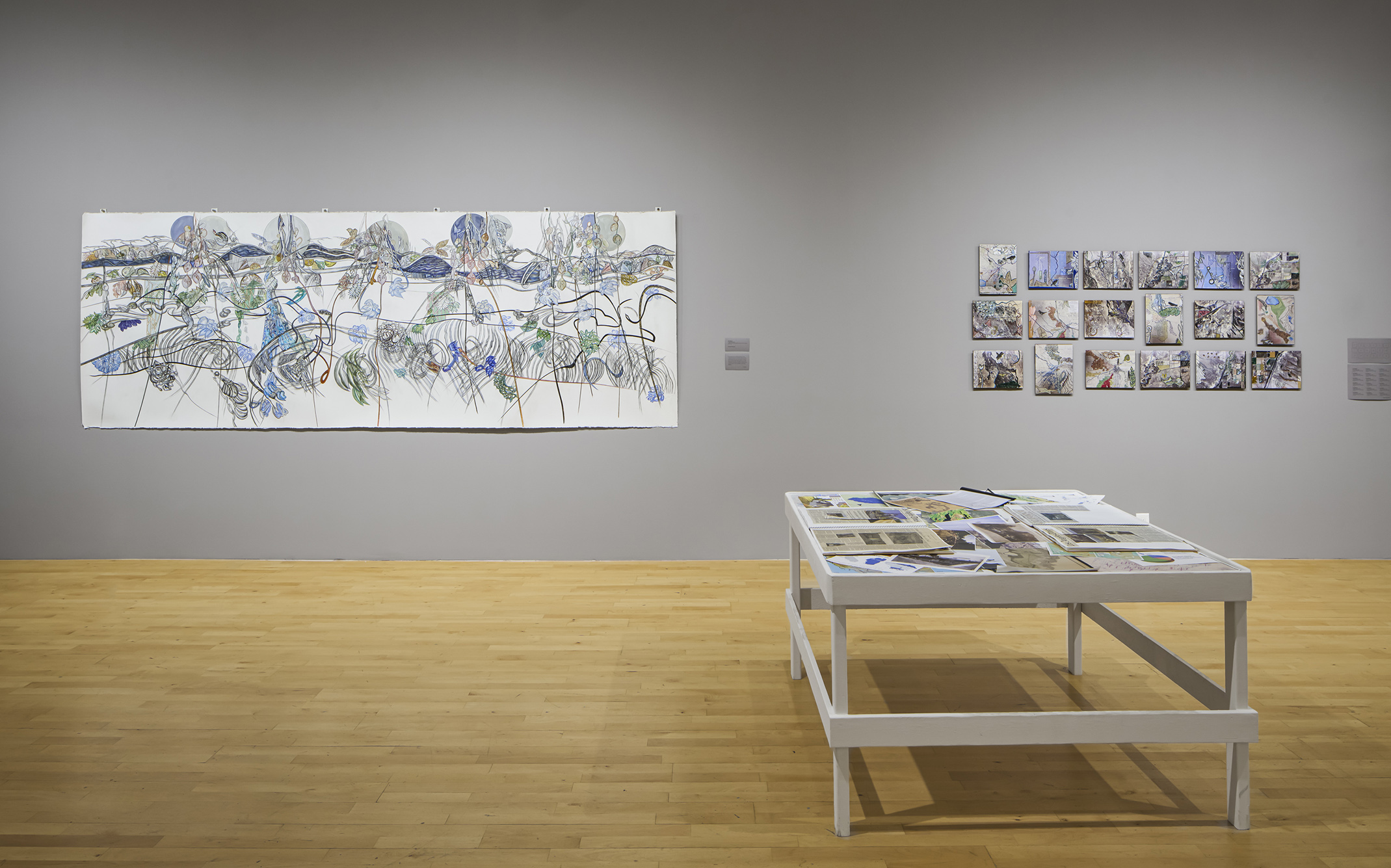
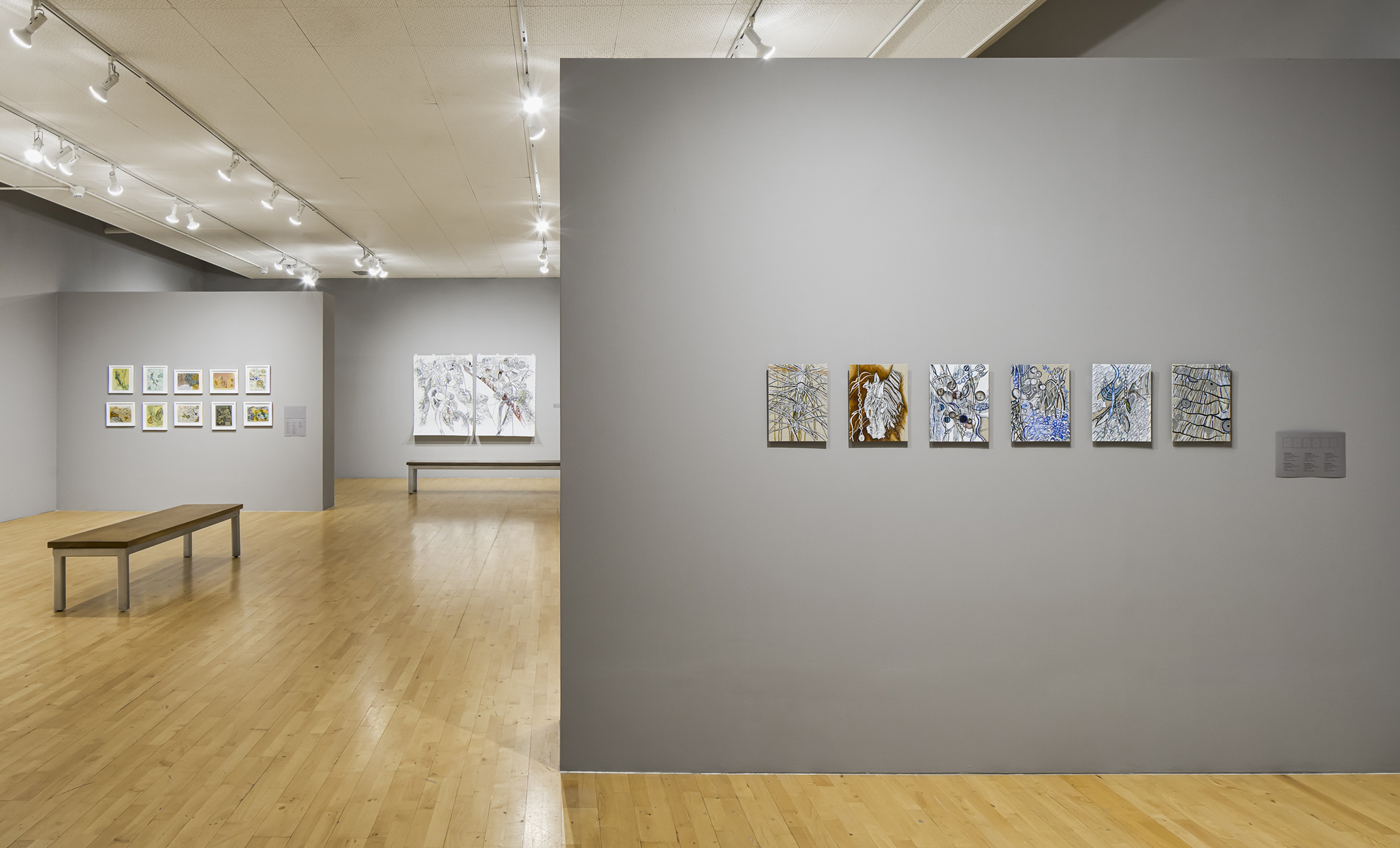
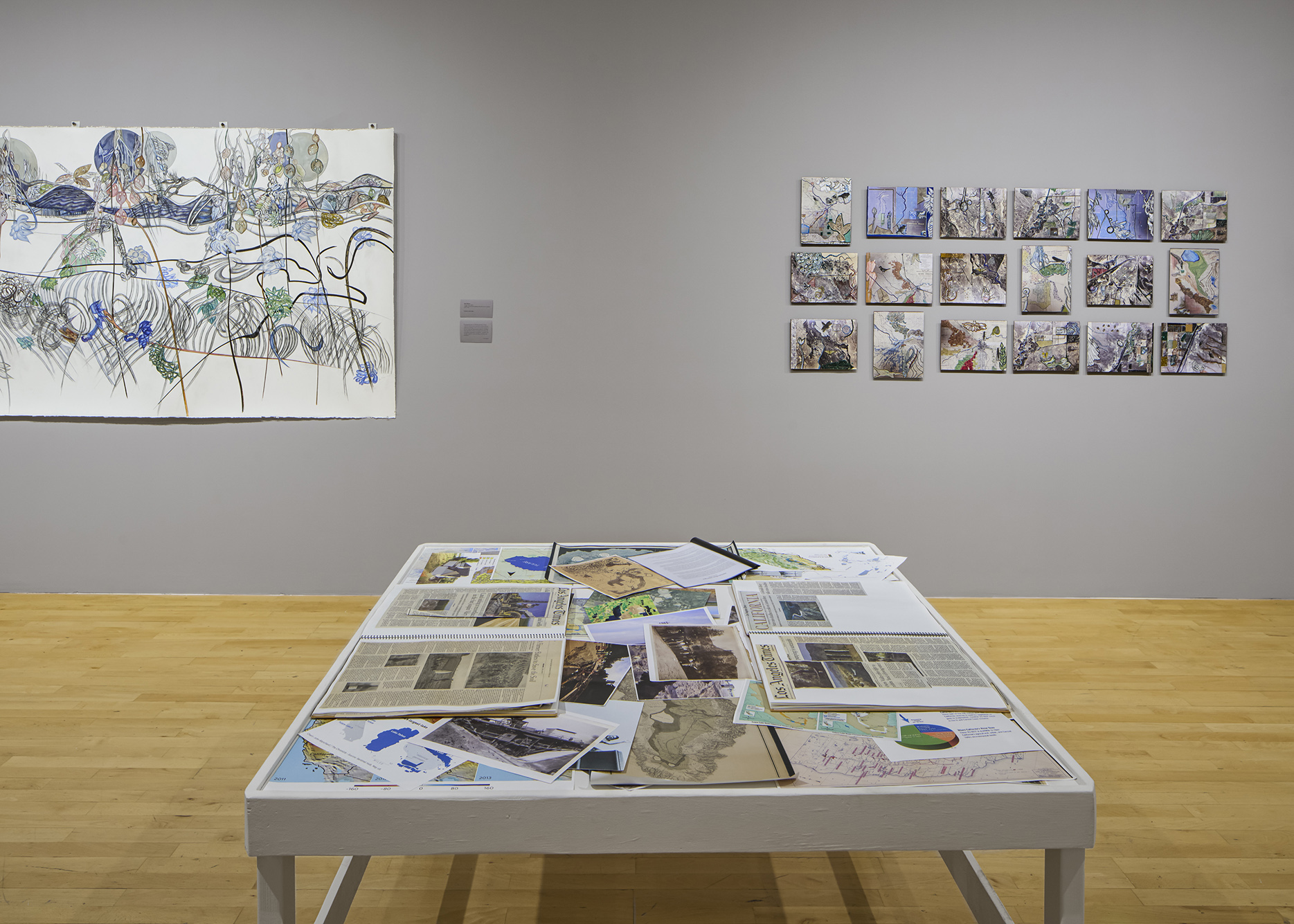
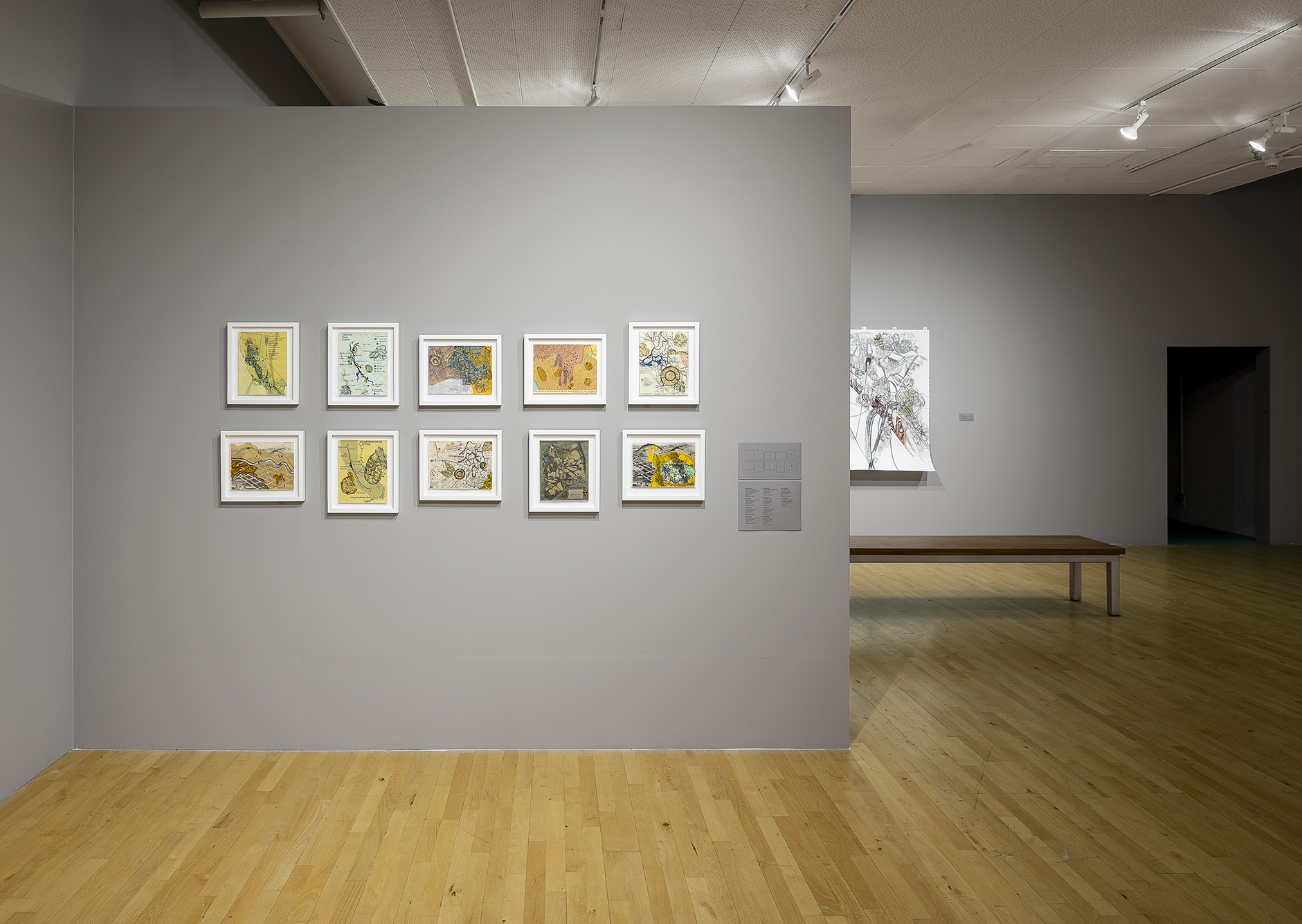
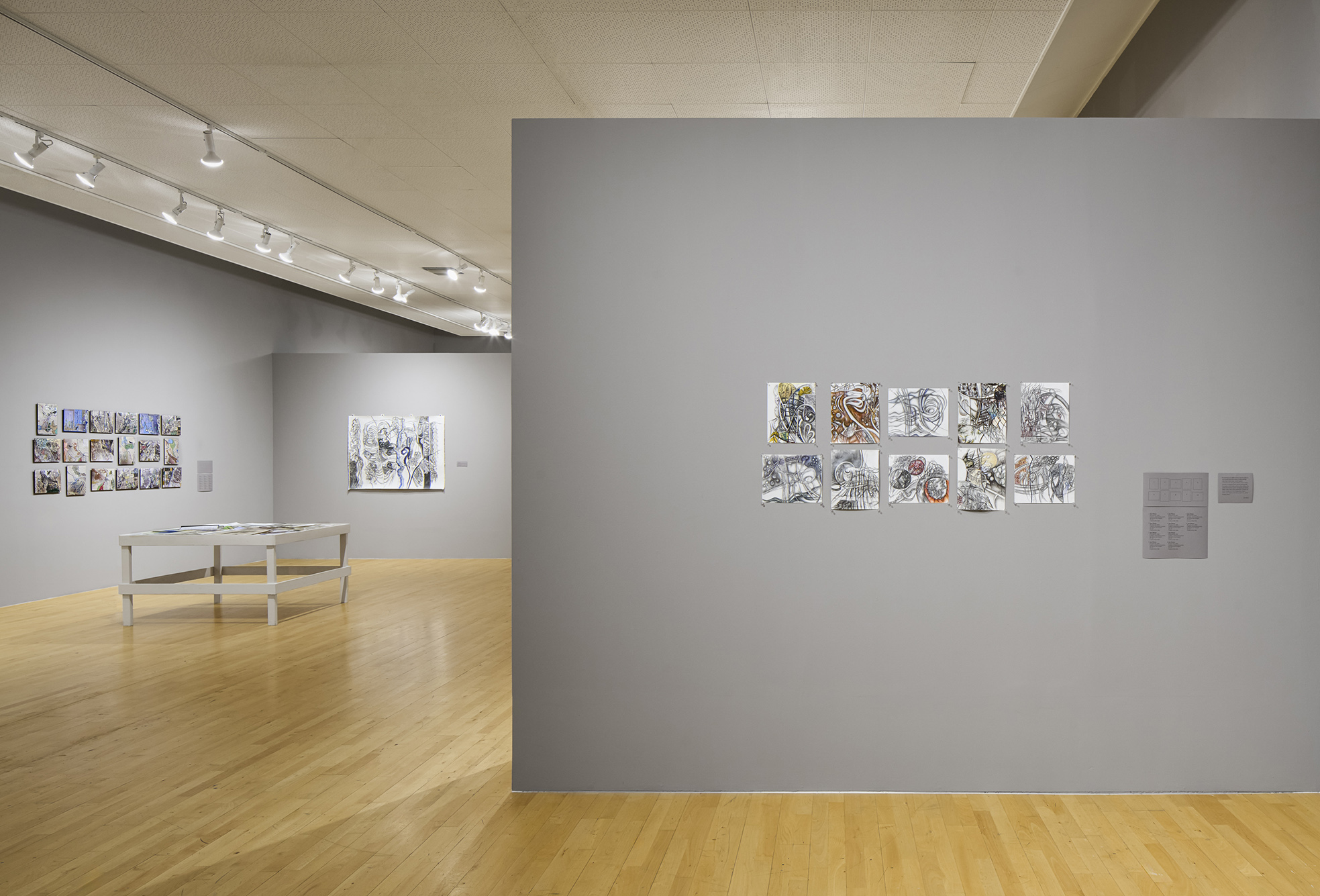
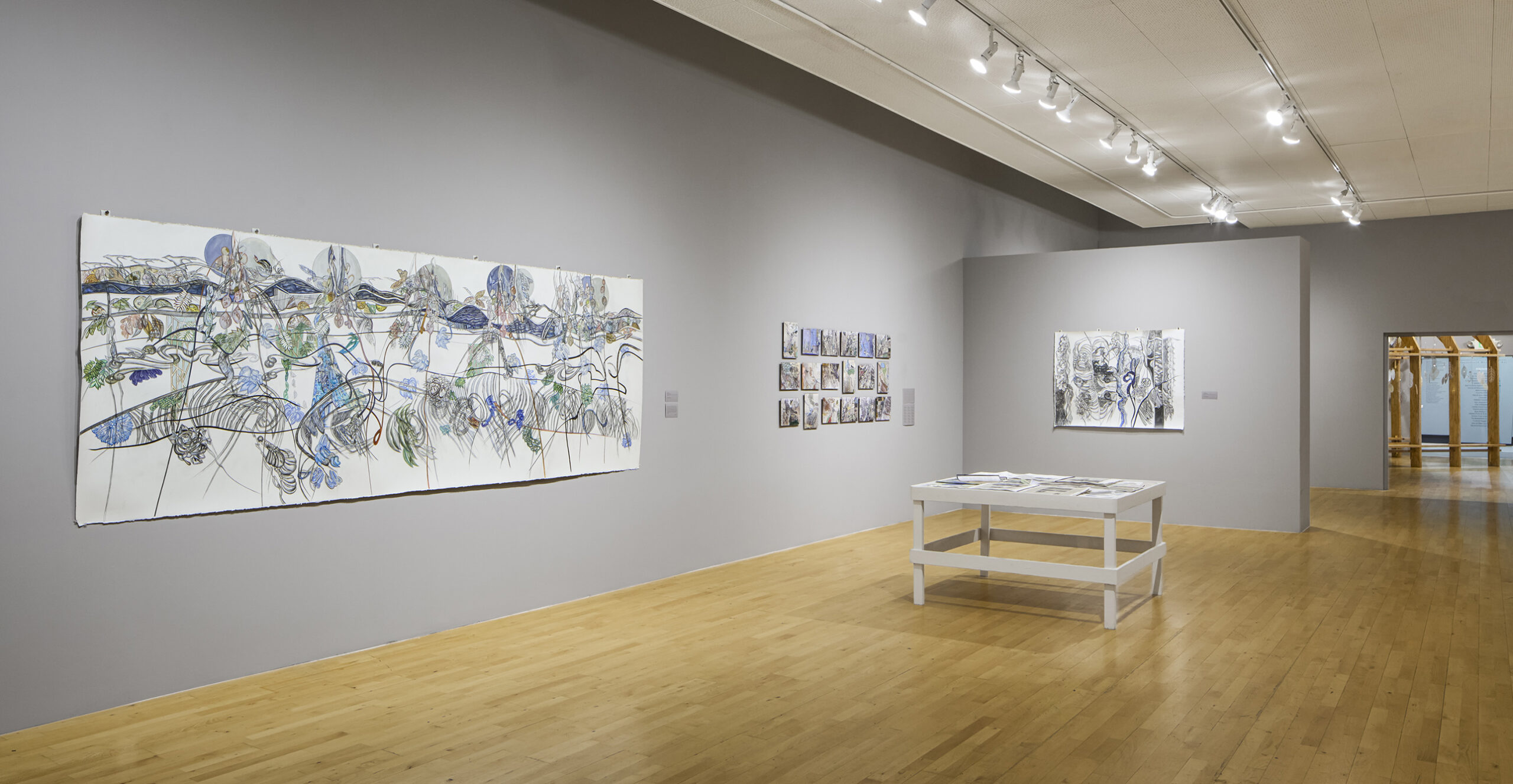
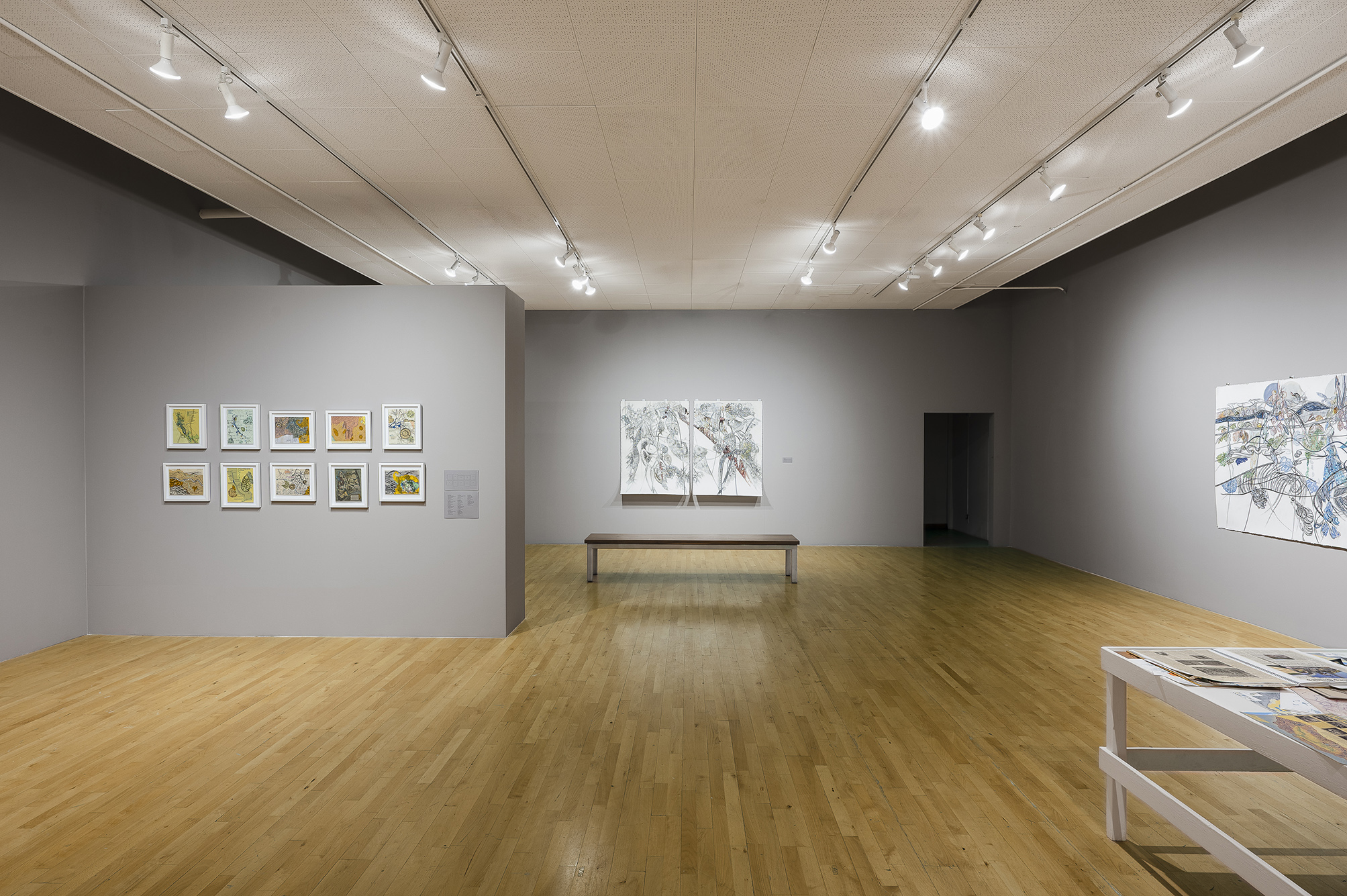
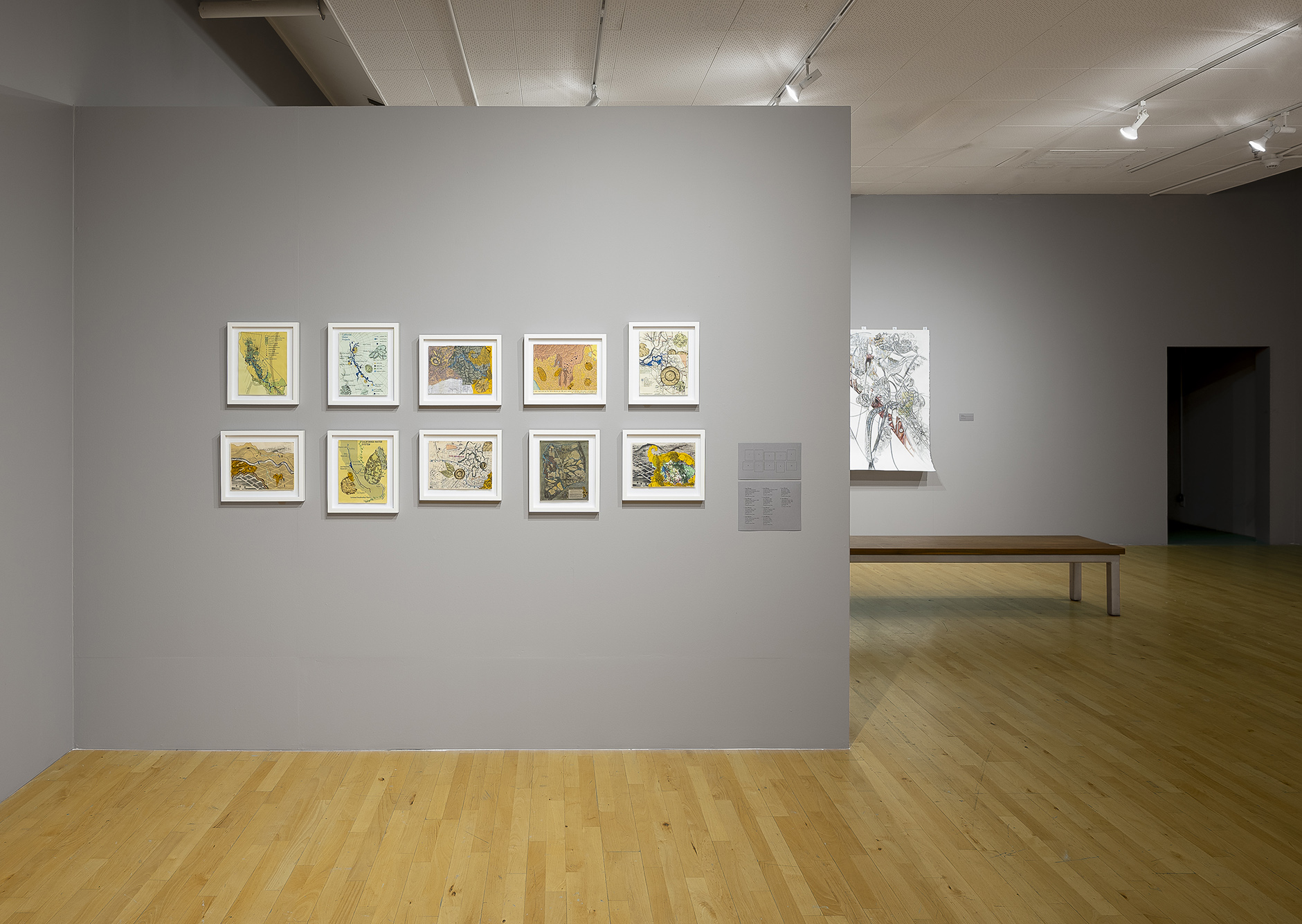
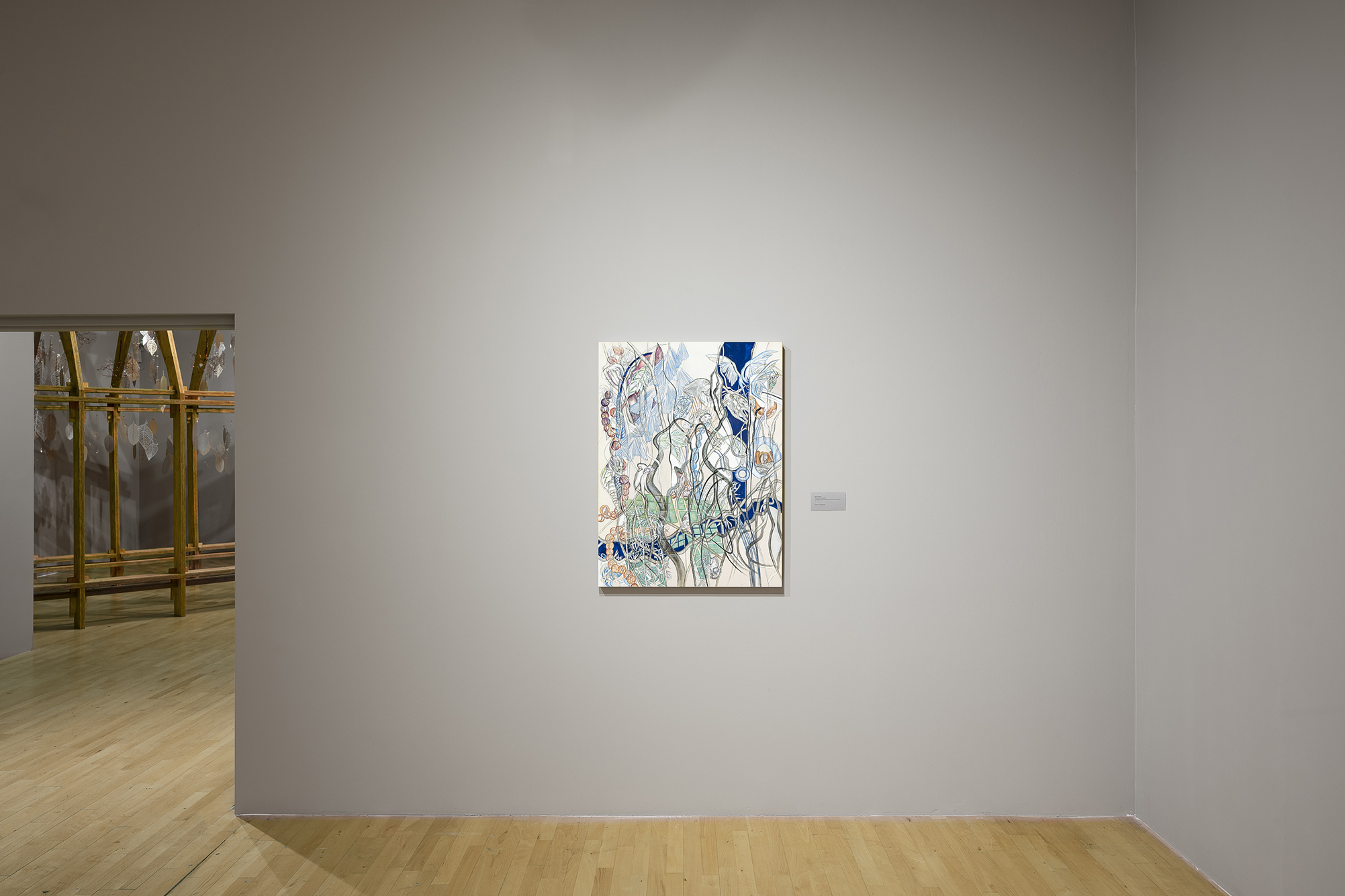
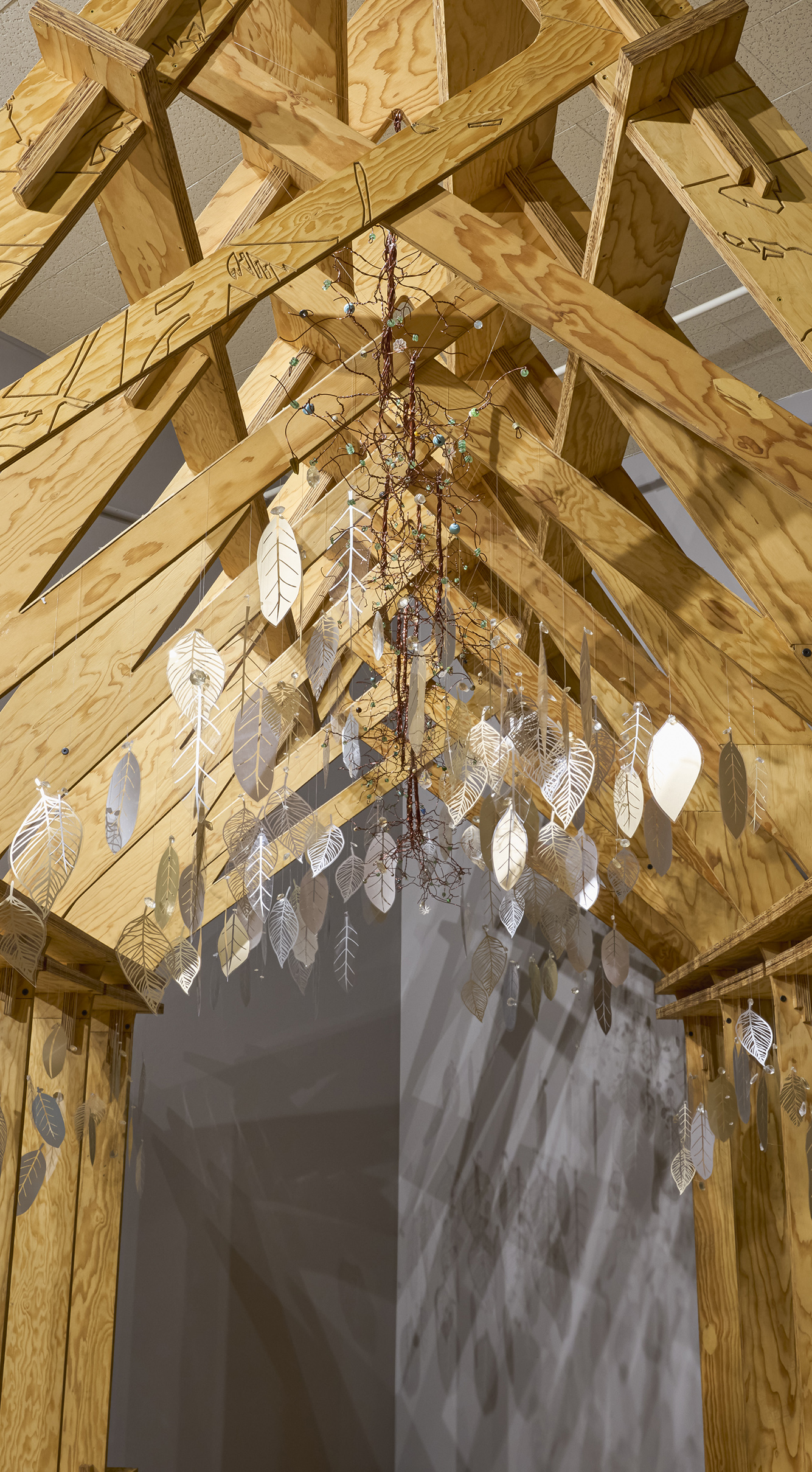
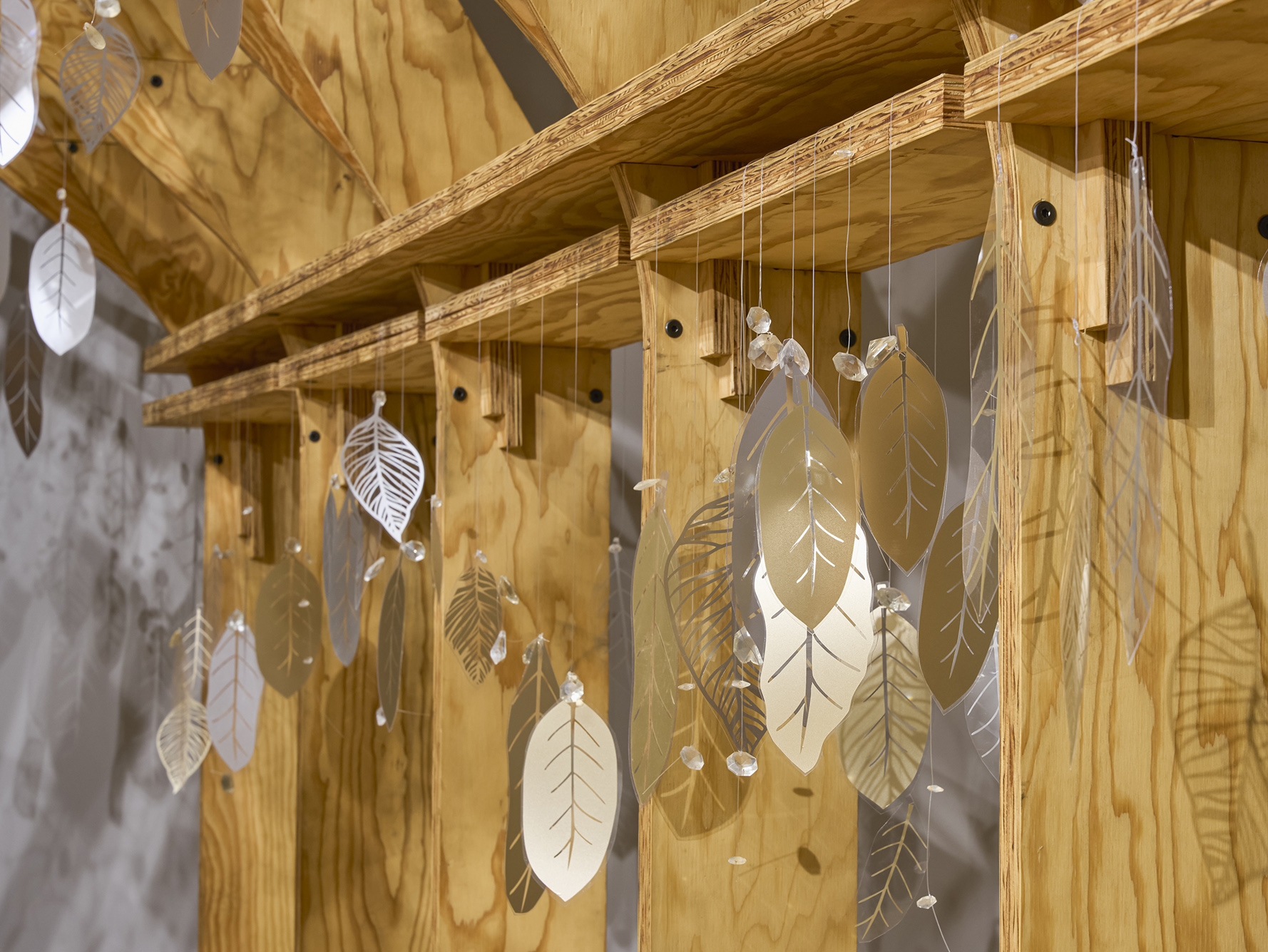
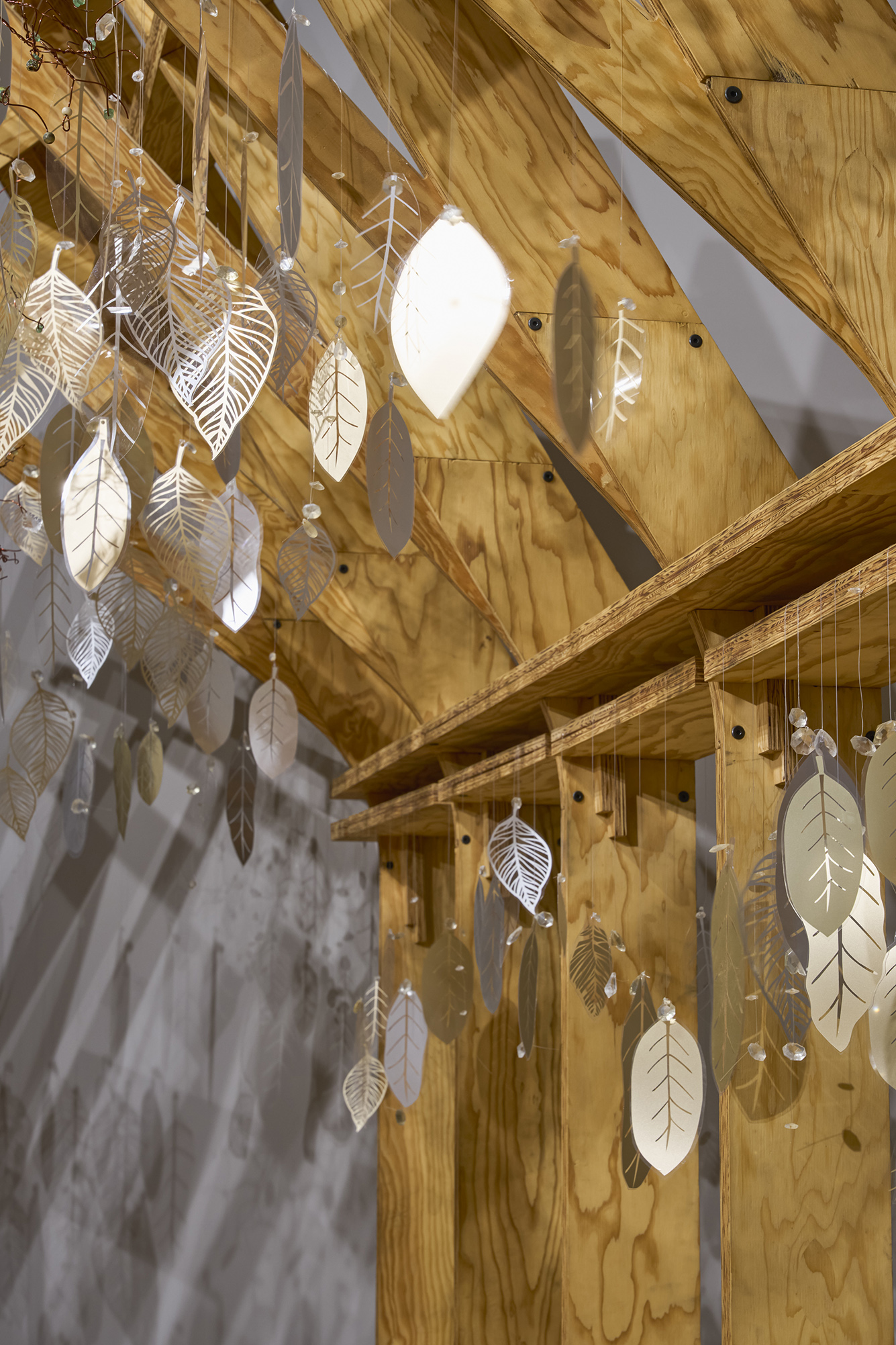
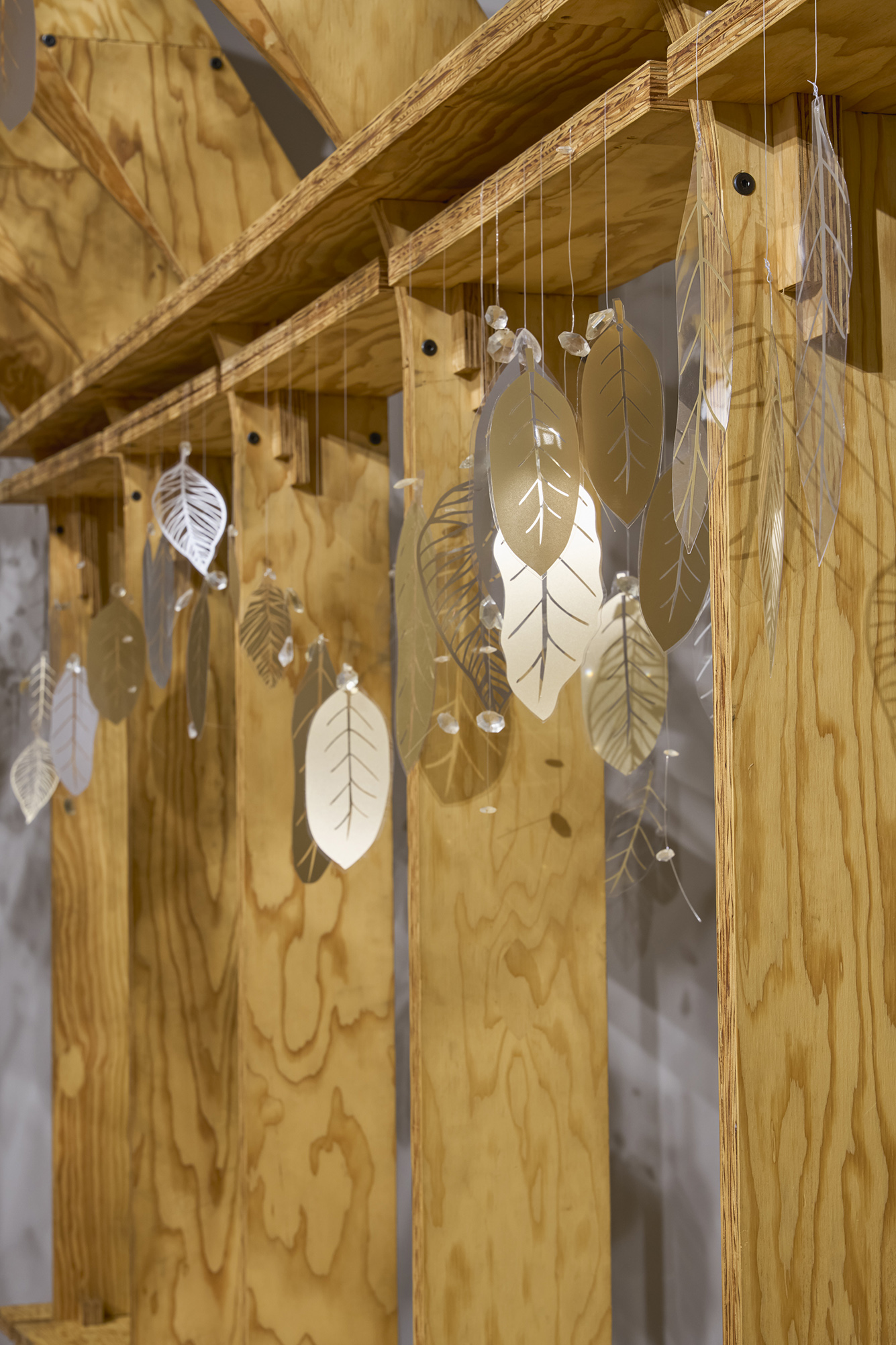
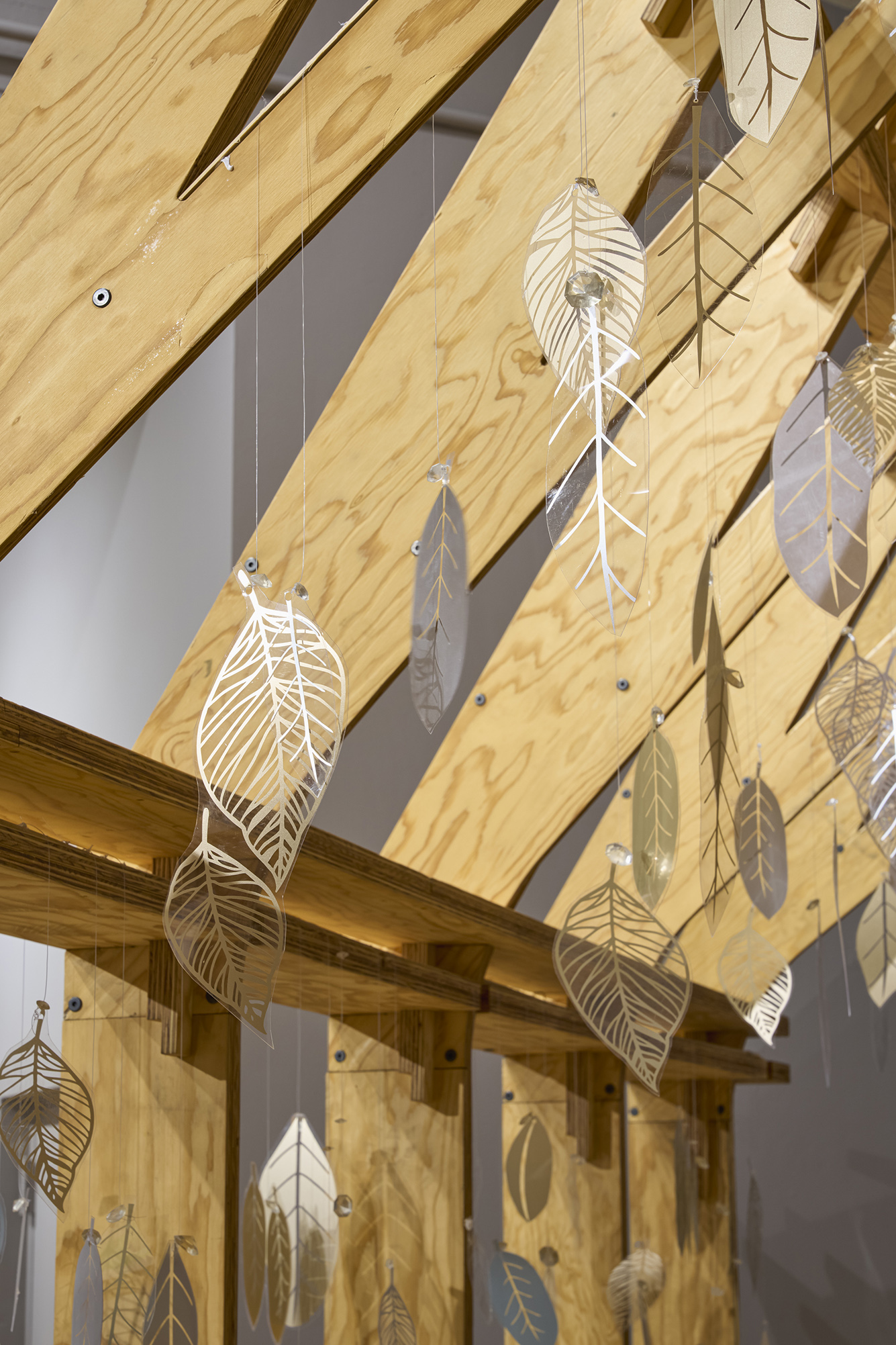
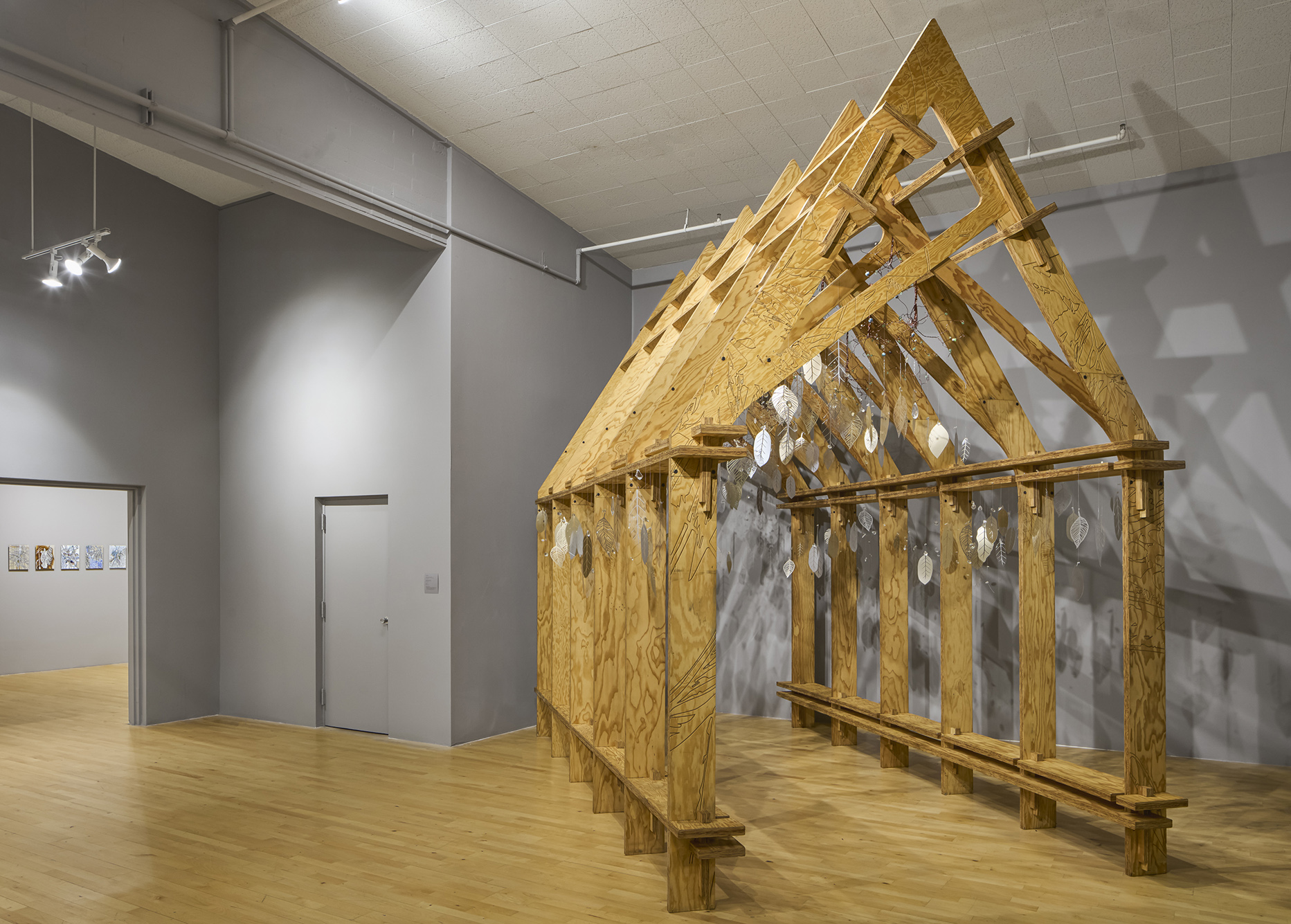
Ann Diener: The Invented Land (January 29 – August 29, 2026) is a solo exhibition by California-based artist Ann Diener that offers a deeply layered and visually immersive investigation of the San Joaquin Valley’s past, present, and future. Rooted in Diener’s personal heritage as a fourth-generation descendant of a California farming family, the exhibition uses drawing, sculpture, and installation to examine the transformation of land through industrial agriculture, environmental change, and cultural memory.
Featuring key works such as Greenhouse (2023), a walk-in sculpture composed of steel, acrylic, and beaded elements, and Liquid Gold, a dynamic drawing referencing the depletion of the region’s aquifers, the exhibition confronts the complex realities of land use, water scarcity, and the socio-political consequences of California’s agricultural dominance. With meticulously layered surfaces that integrate architectural schematics, botanical imagery, and historical cartography, Diener constructs dreamlike, archival landscapes that function as both critique and homage.
The Bakersfield Museum of Art’s presentation includes new site-responsive works inspired by the Kern River, deepening the exhibition’s regional resonance. Located in the heart of the Valley, BMoA provides a uniquely meaningful context for this exhibition, allowing Central Valley audiences to reflect on their lived experiences and connect local histories to broader environmental and cultural narratives.
This project contributes significantly to the art of historical canon by advancing contemporary conversations around land art, eco-critical practices, and visual storytelling rooted in place-based research. Diener’s work, which bridges personal history with environmental critique, aligns with emerging discourses in contemporary drawing and installation that challenge traditional landscape representations and foreground the politics of place.
The book The Invented Land has been re-issued with additional work and essays by Shana Nys Dambrot, art critic, curator and author, Ian James, staff writer for the Los Angeles Times, whose work focuses on water, Victor Gonzales, Curator of Collections and Exhibitions, The Bakersfield Museum of Art, and Andi Campognone, curator, author and filmmaker and Manager/Curator of The Lancaster Museum of Art and History, 2011-2024.
Download PDF of The Invented Land, Lancaster Museum of Art and History and Bakersfield Museum of Art
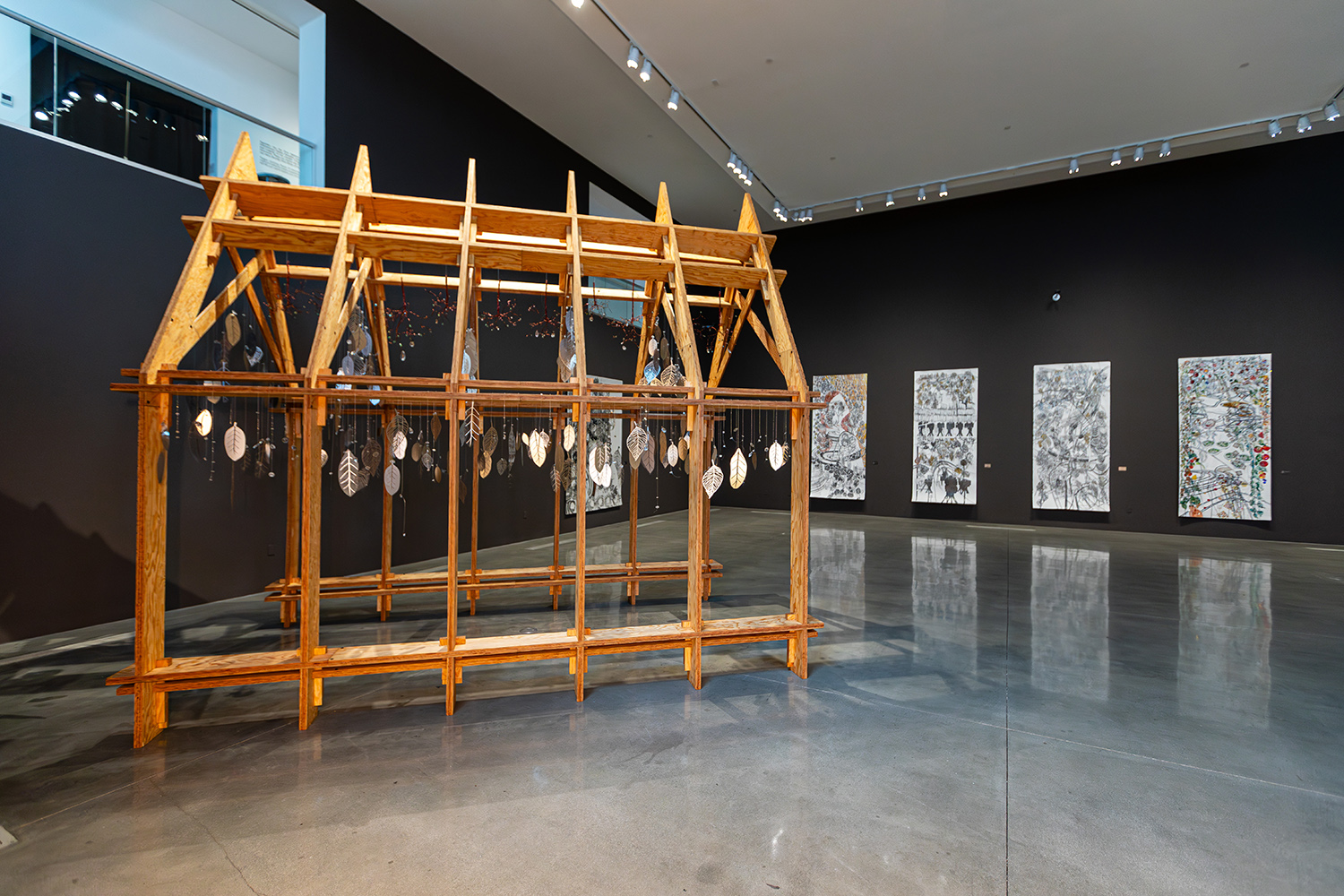
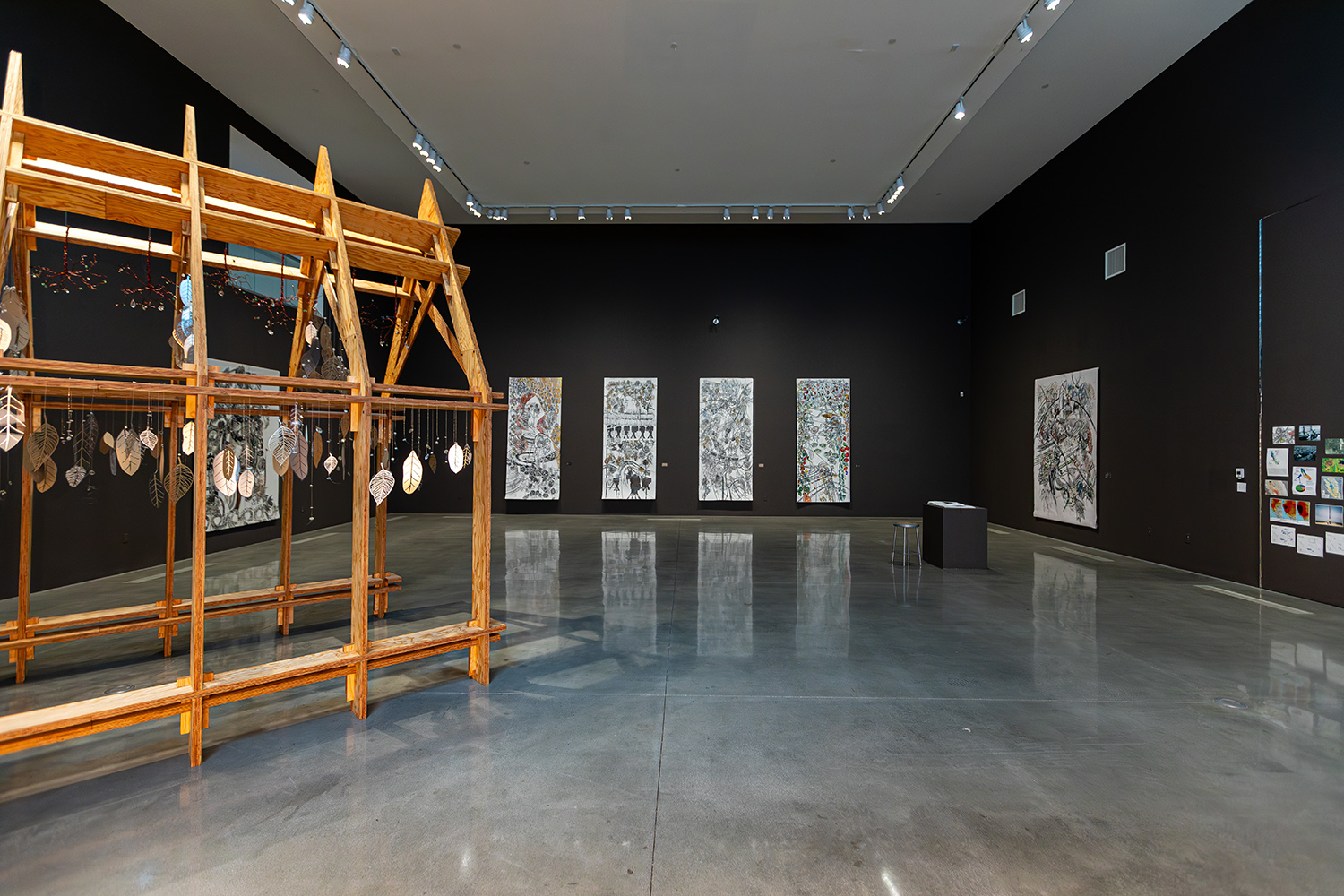
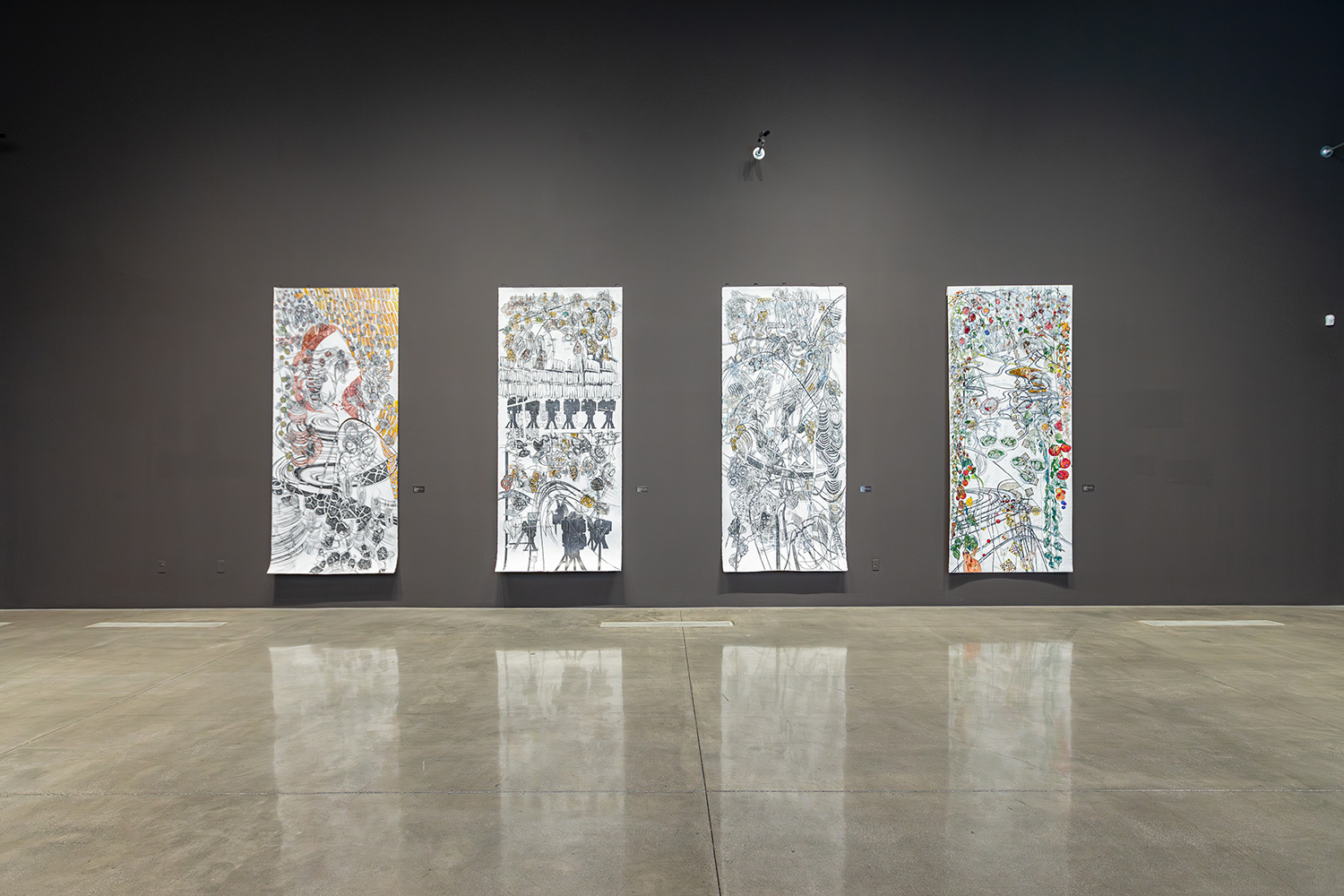
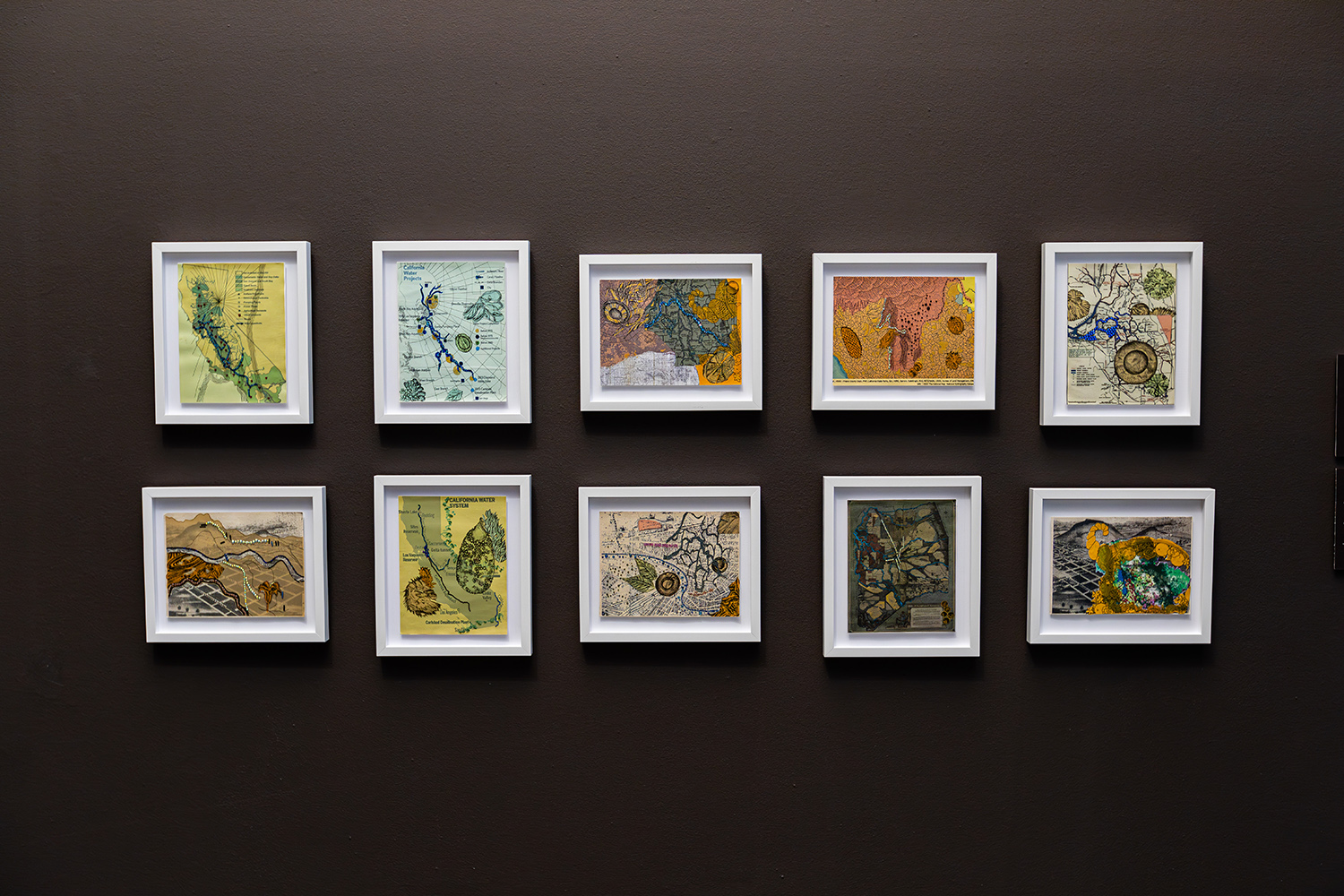
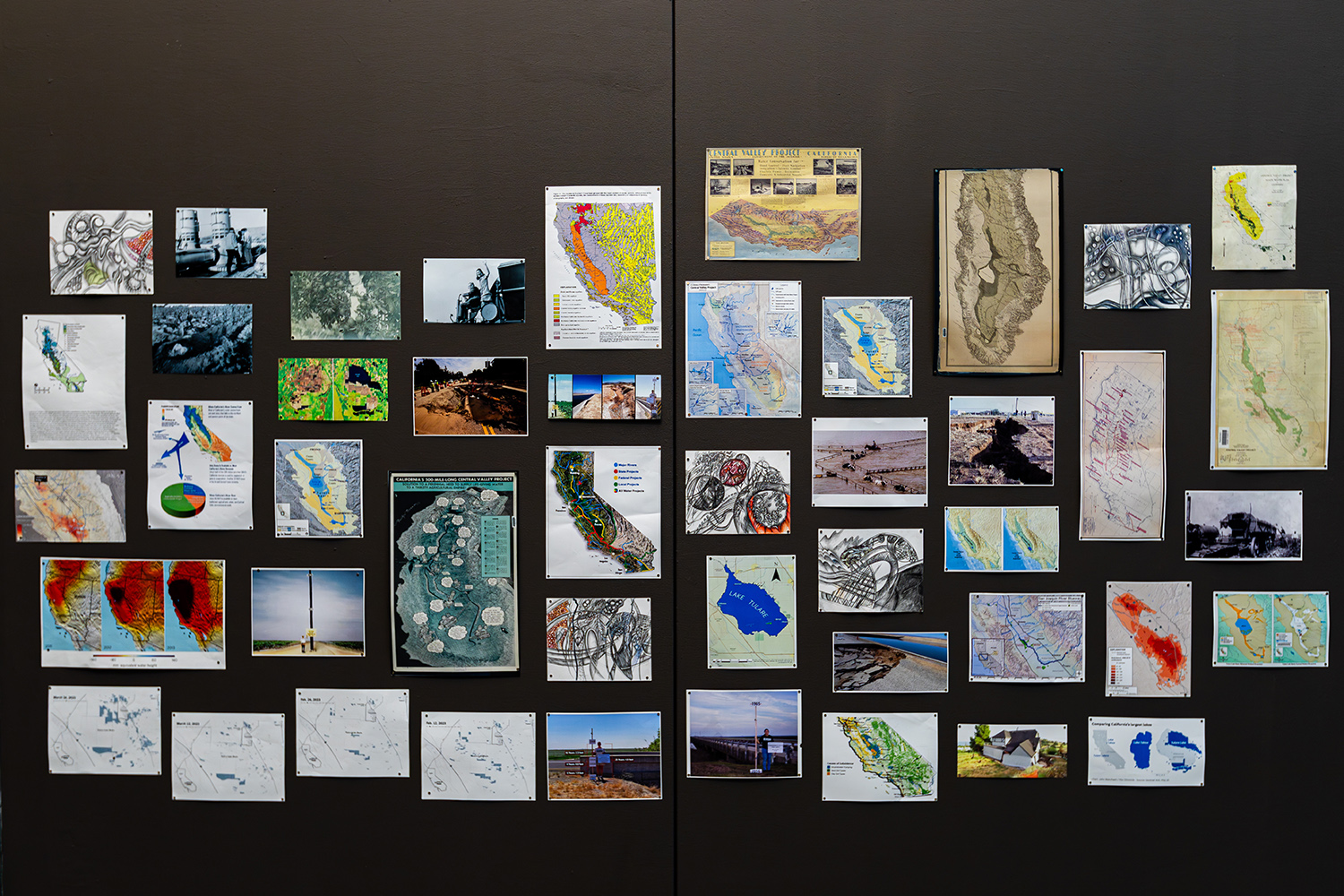
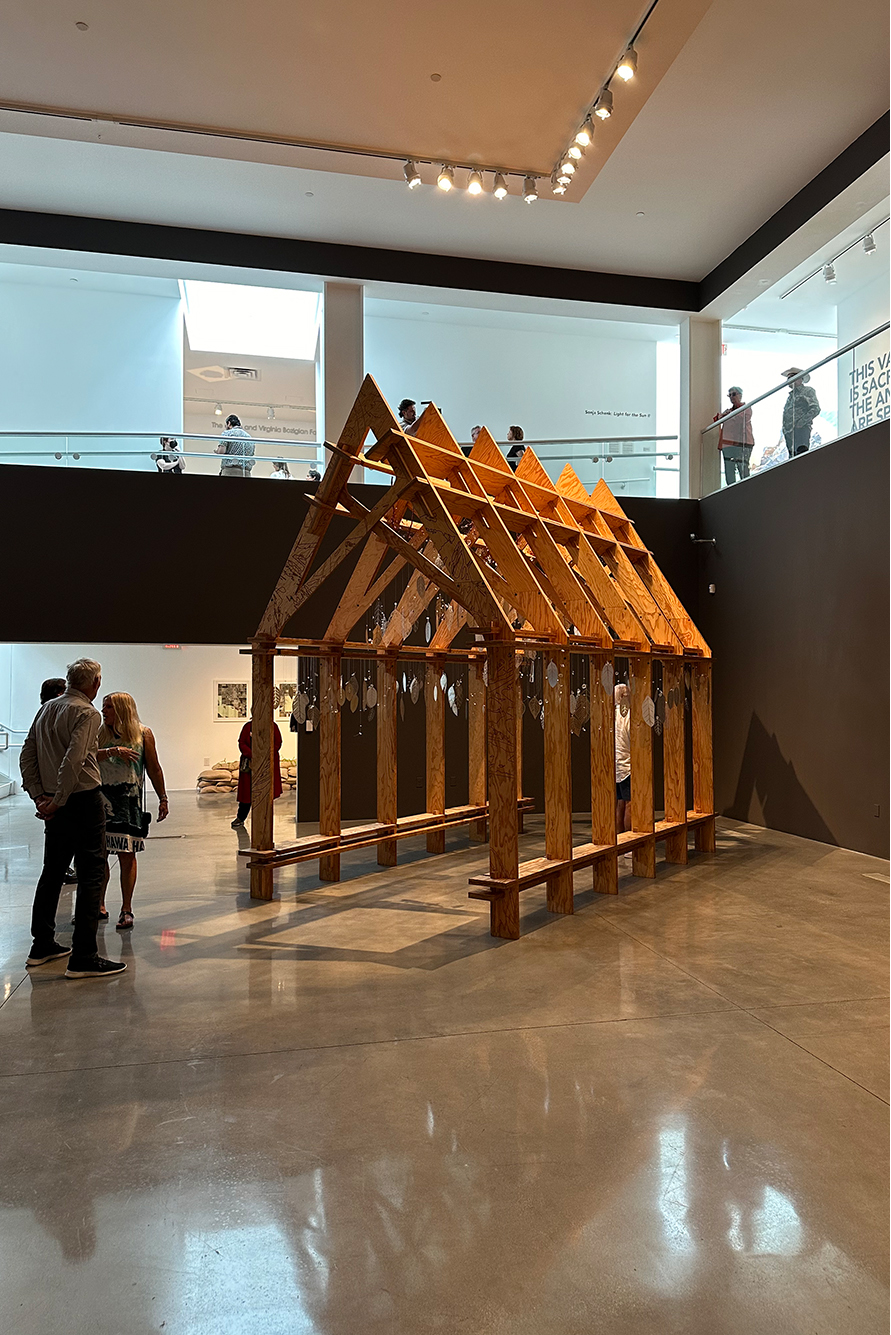
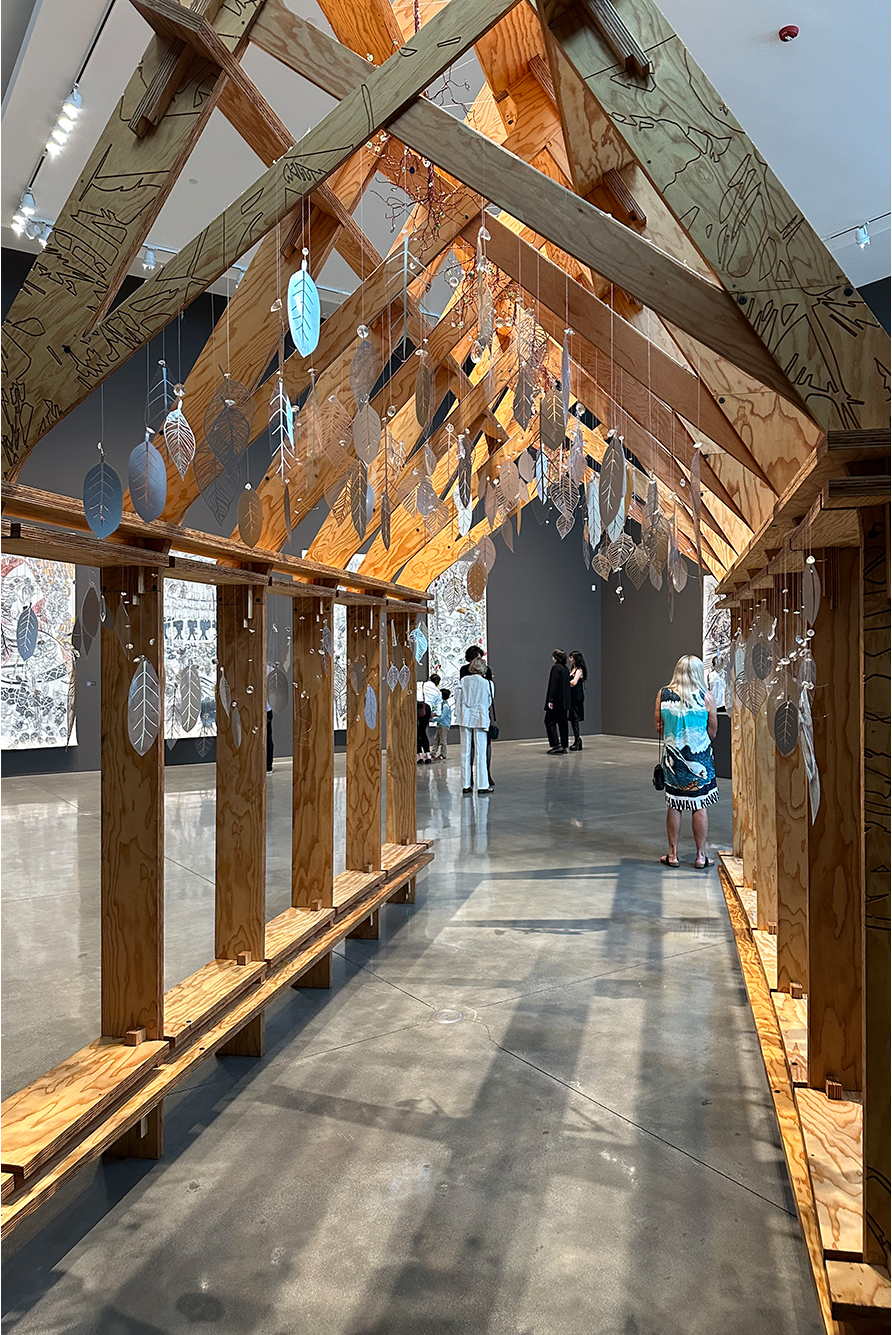
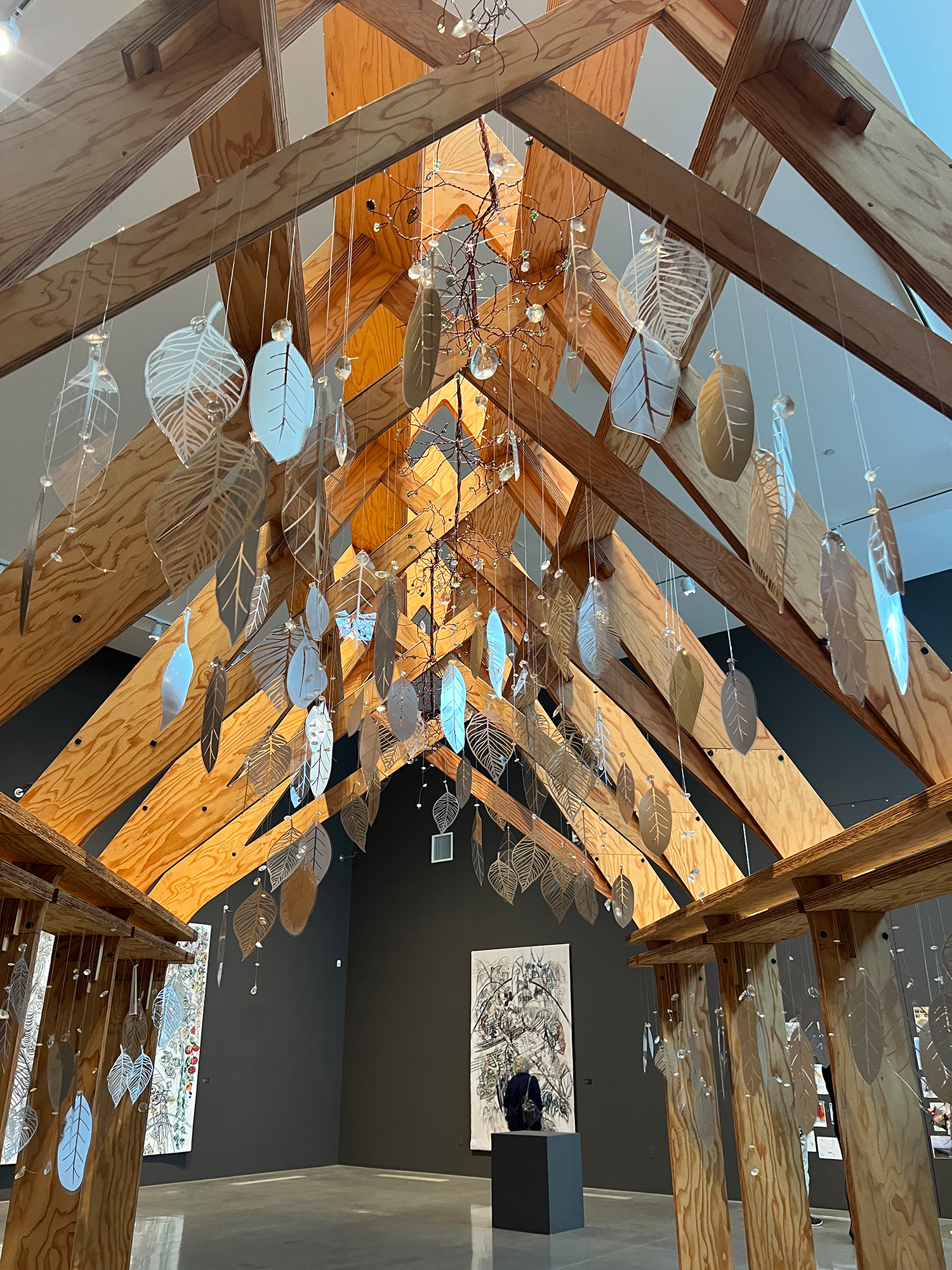
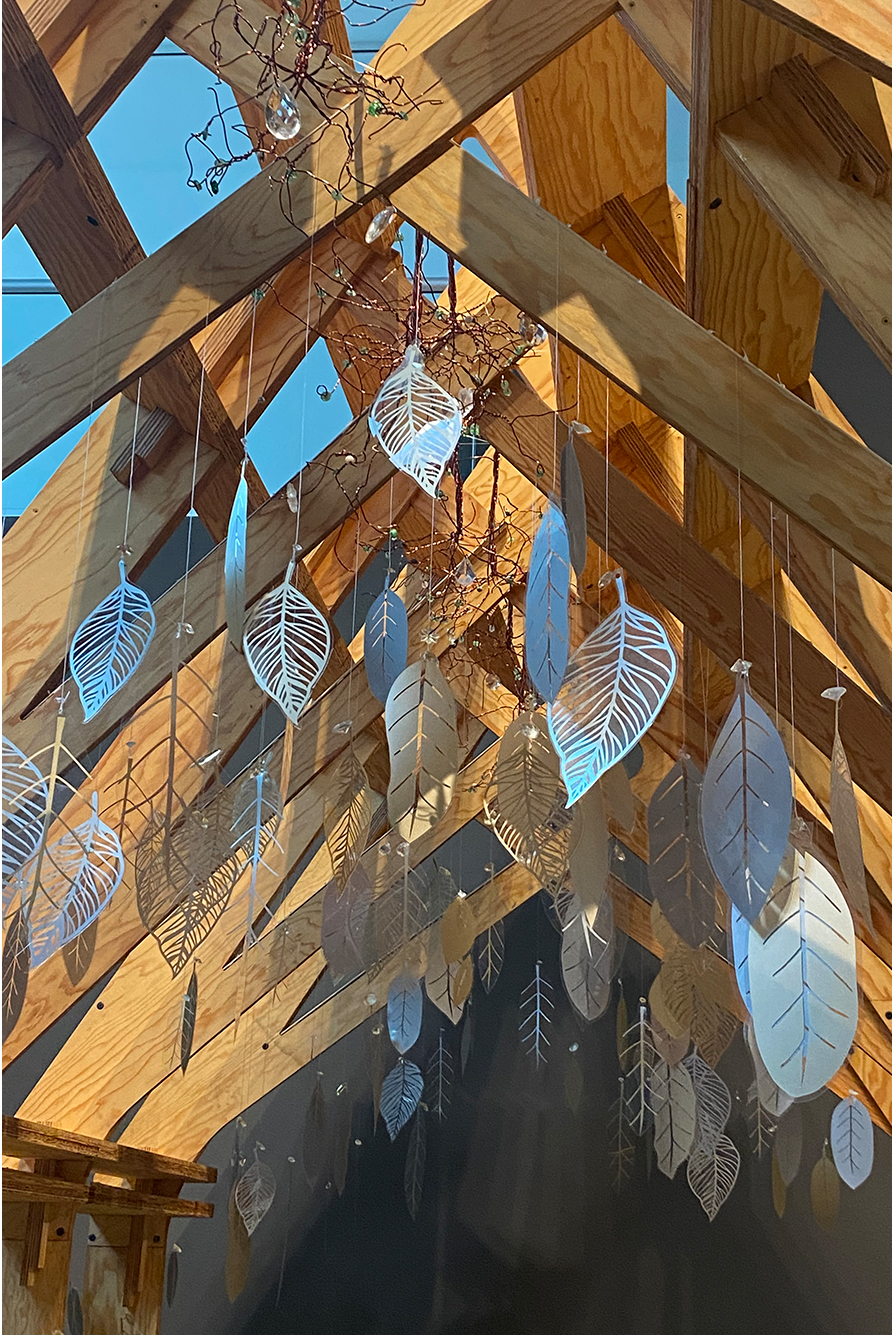
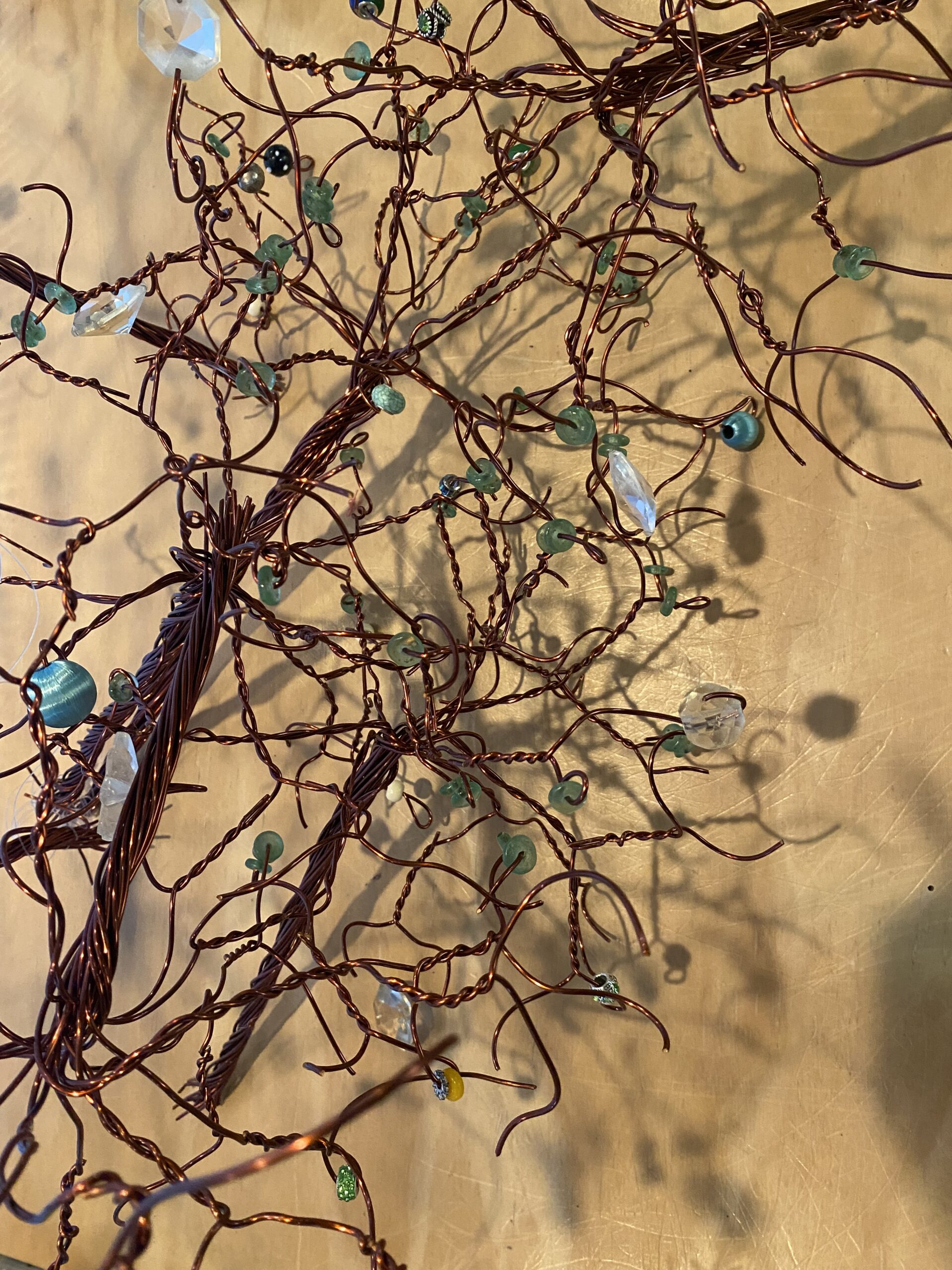
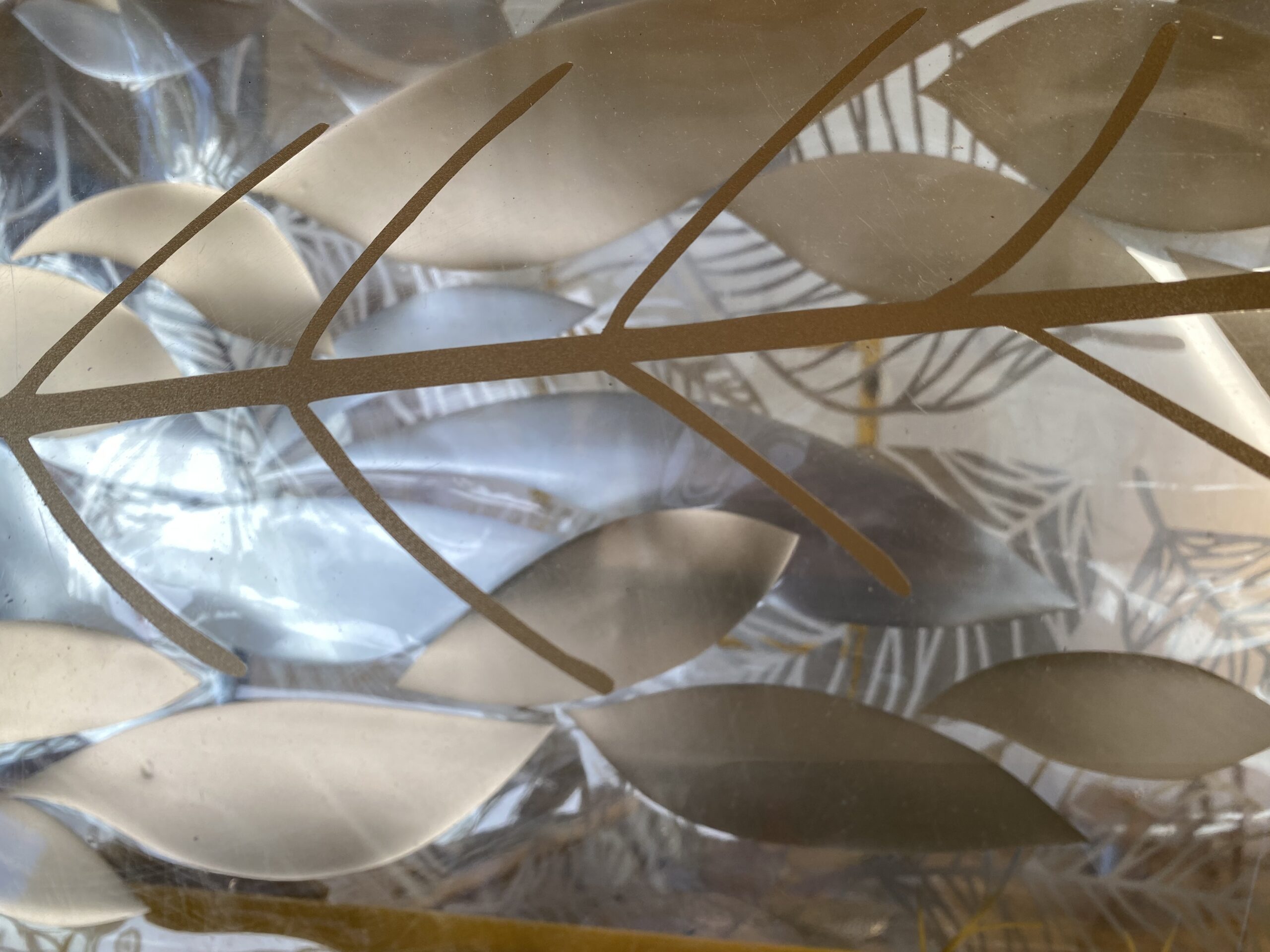
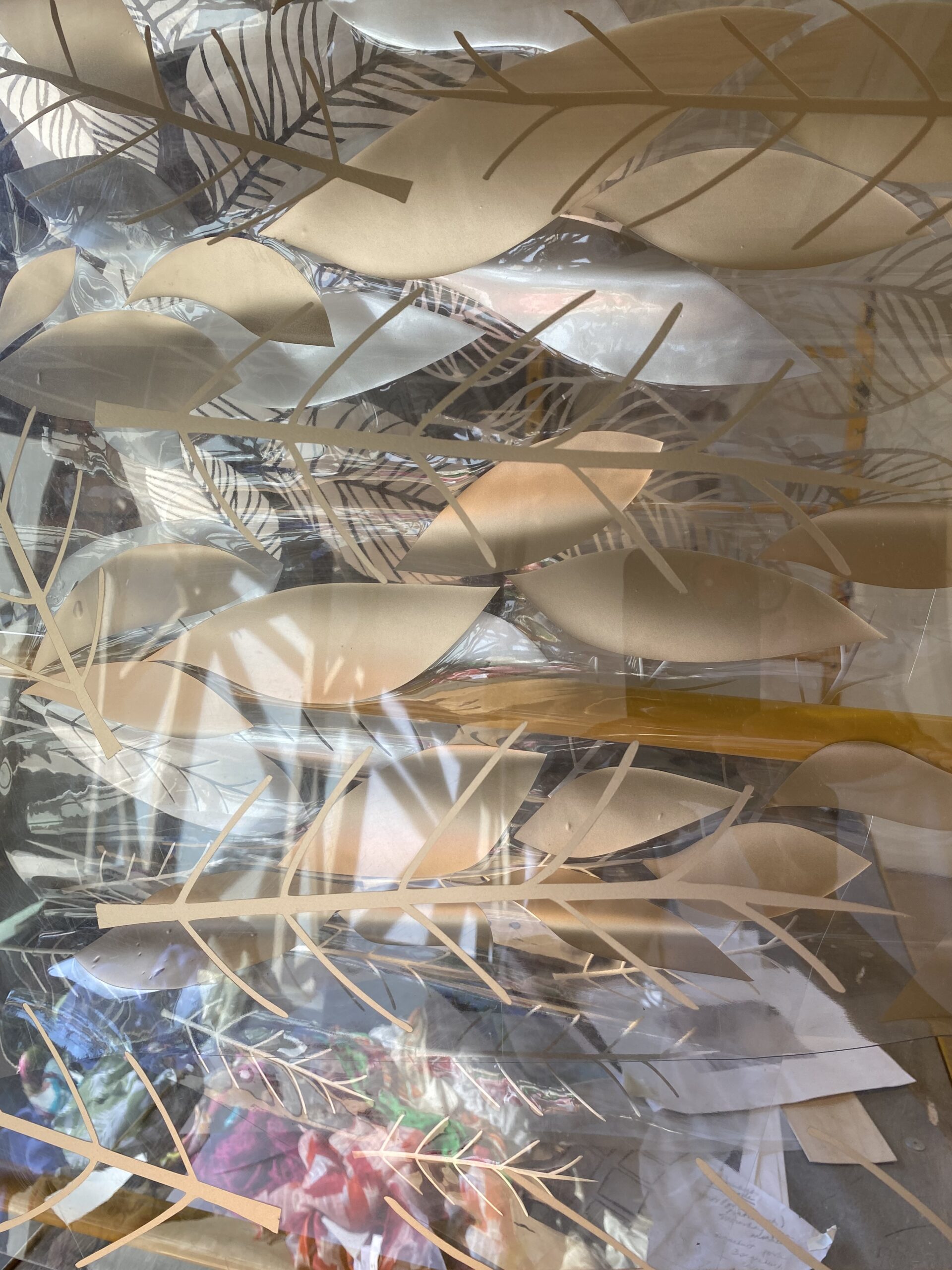
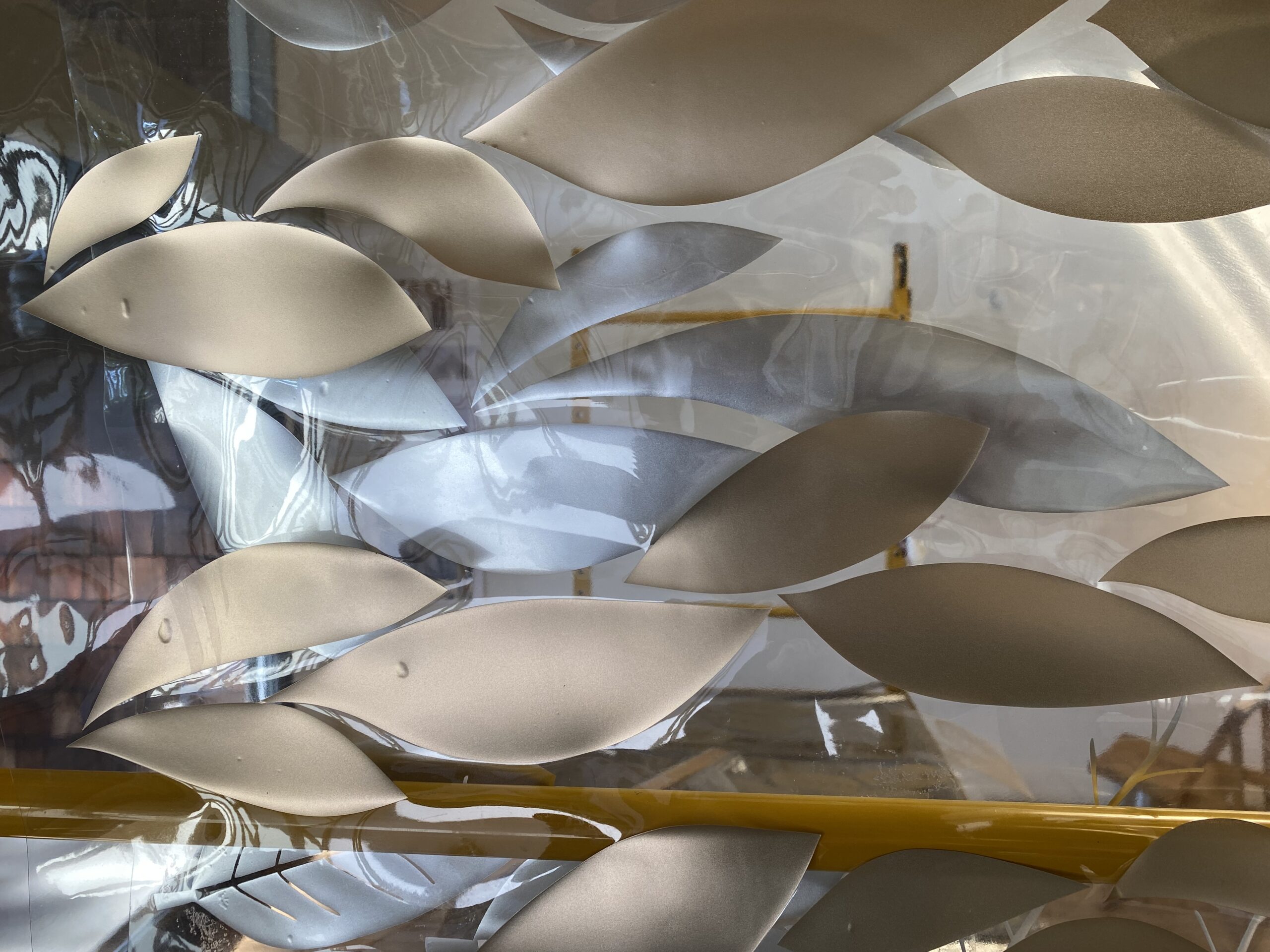
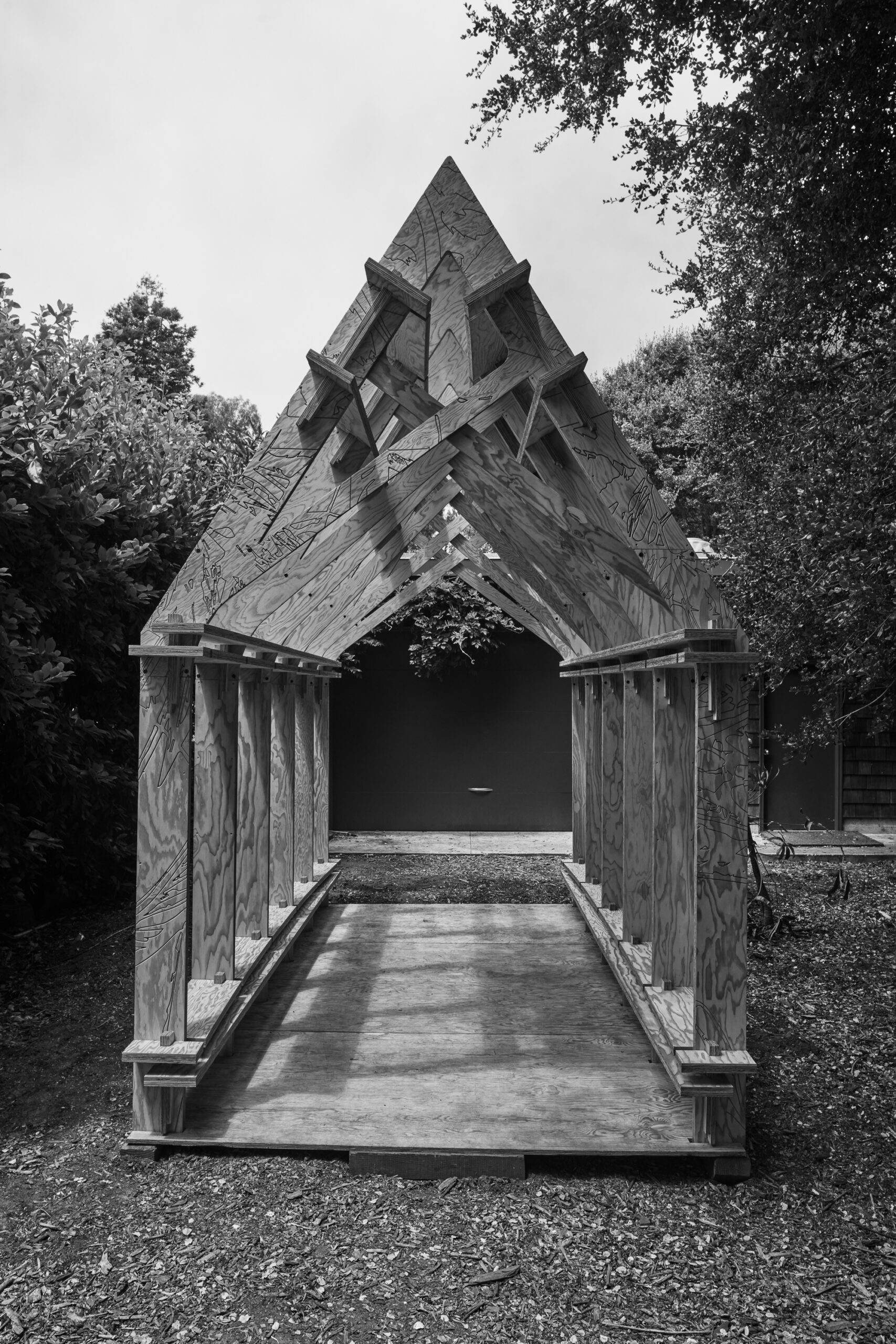
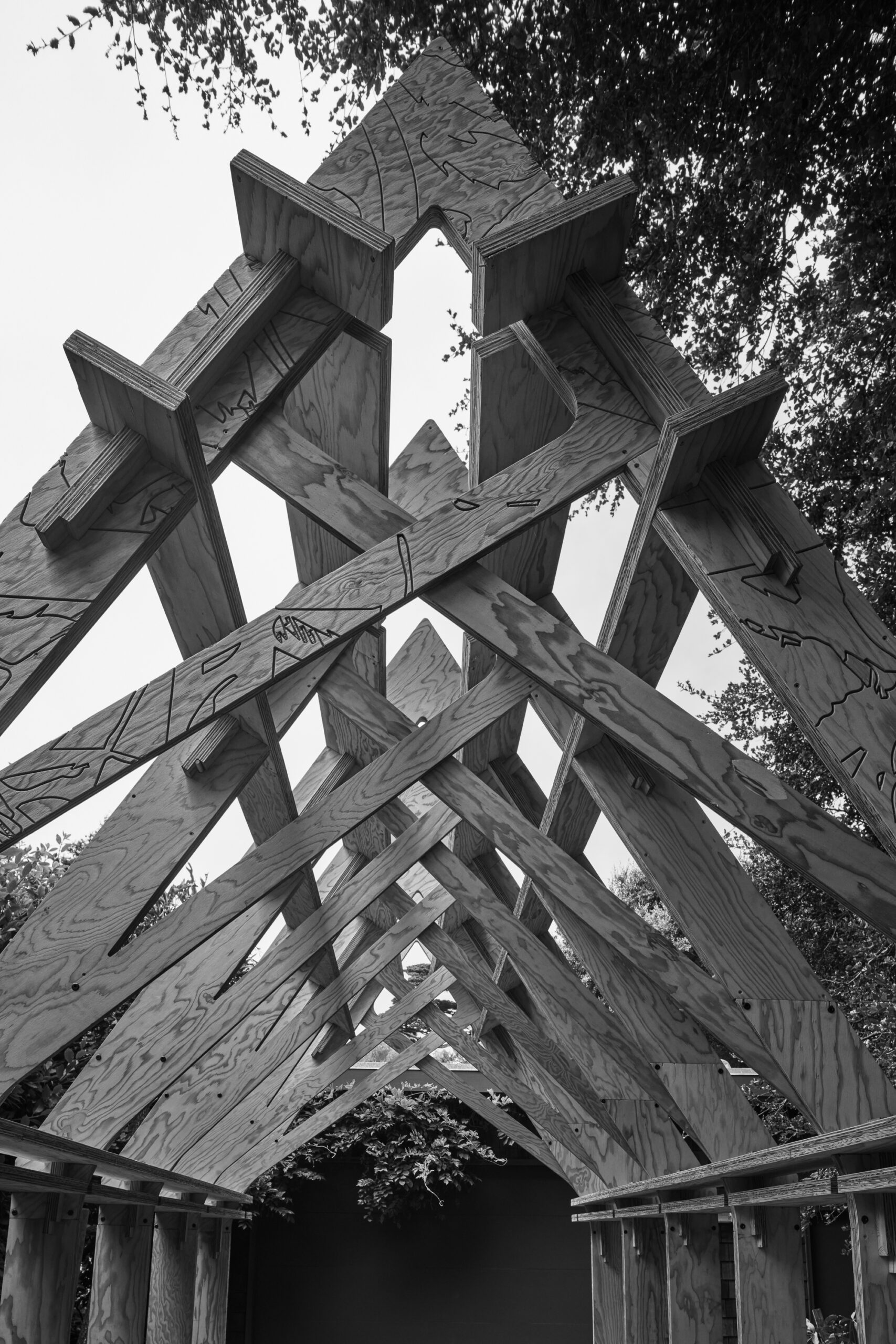
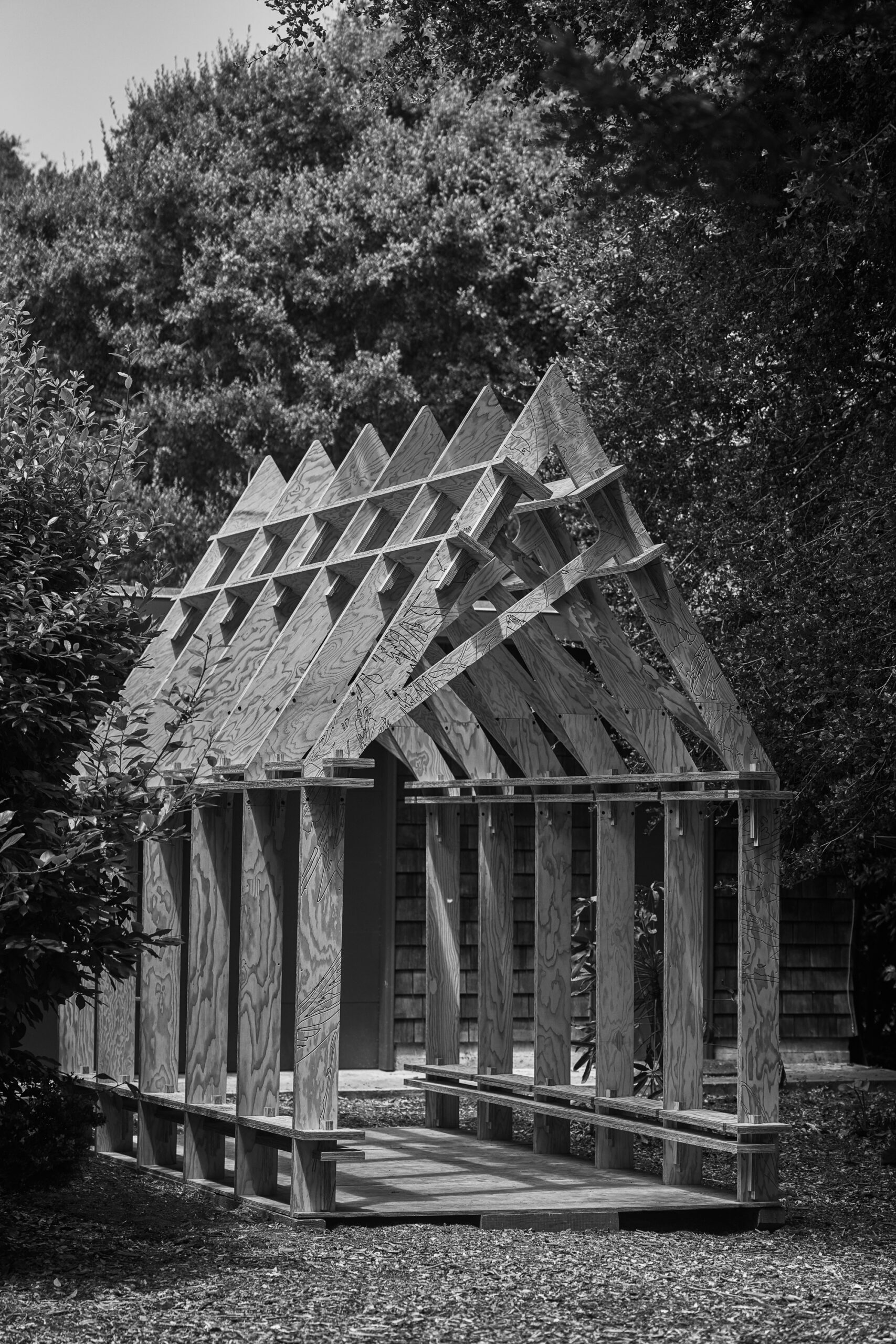
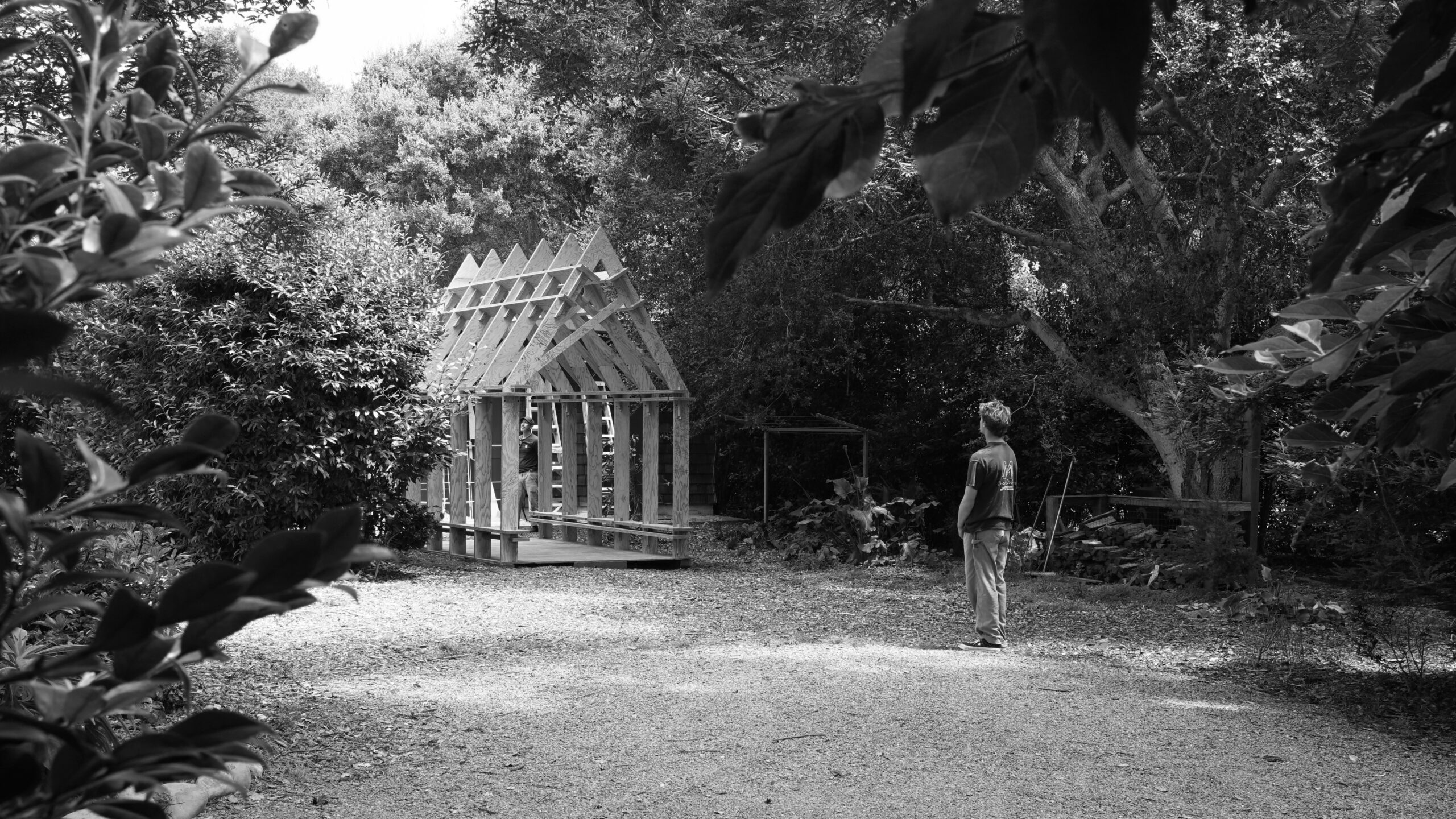
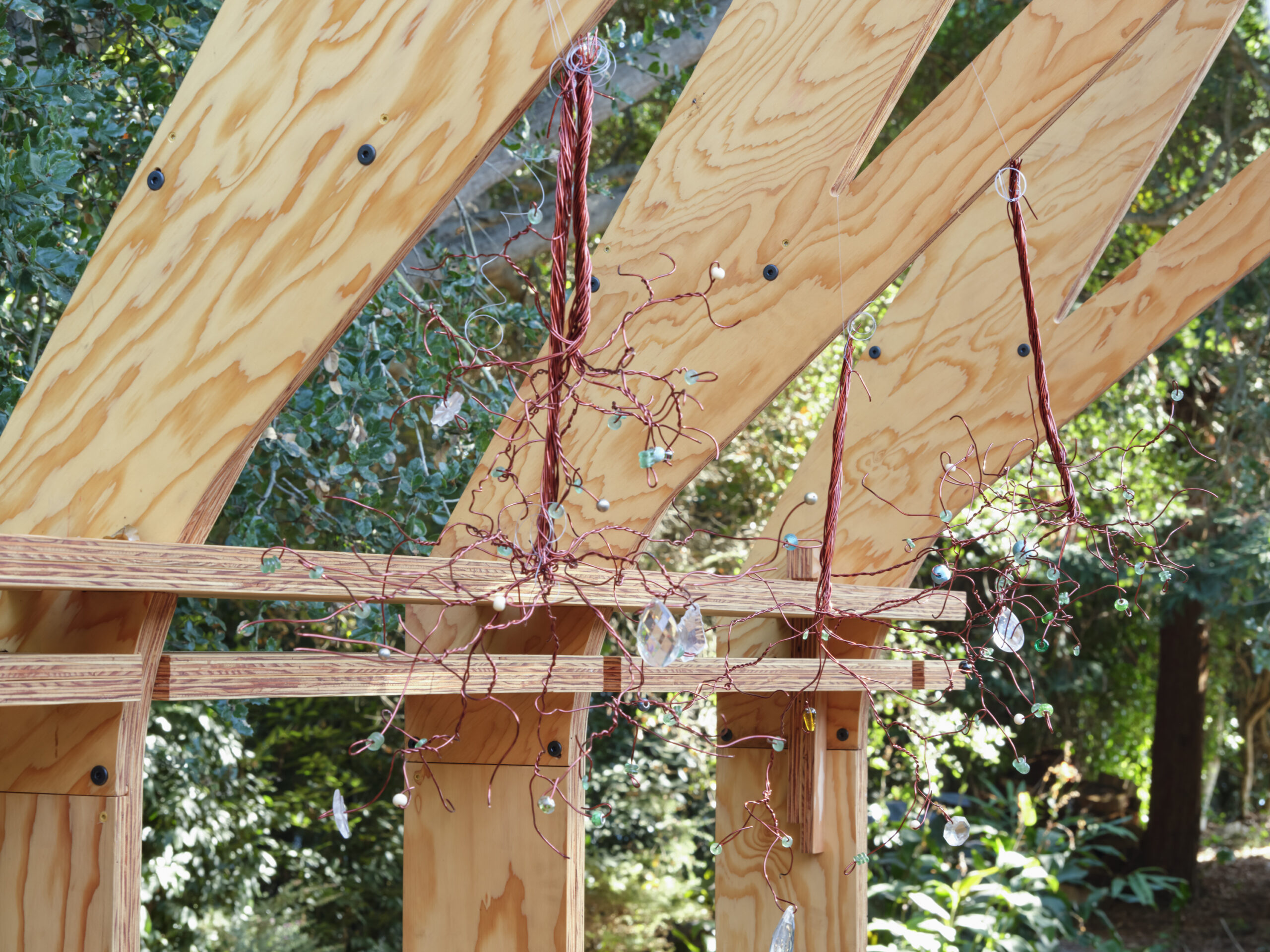
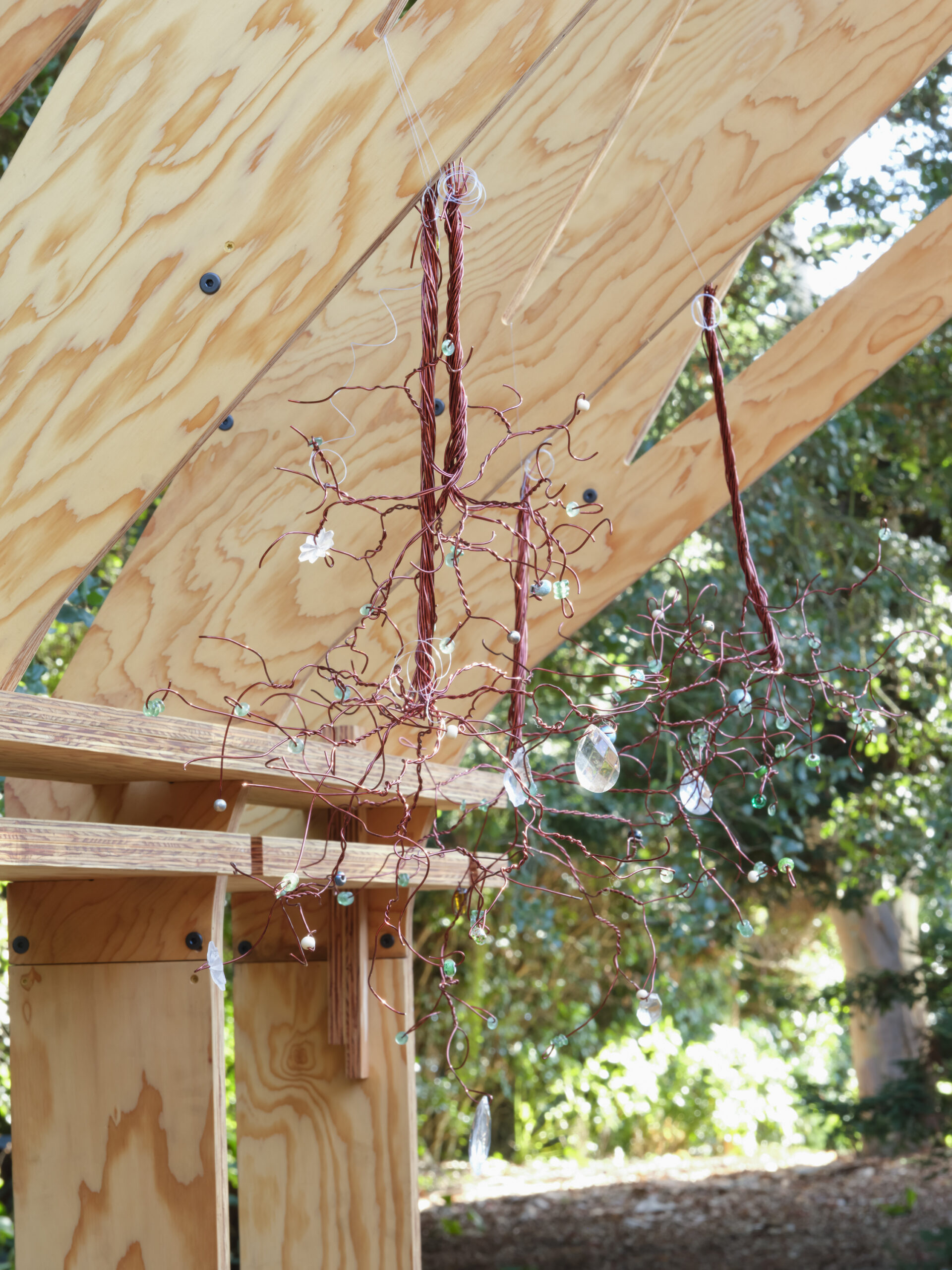
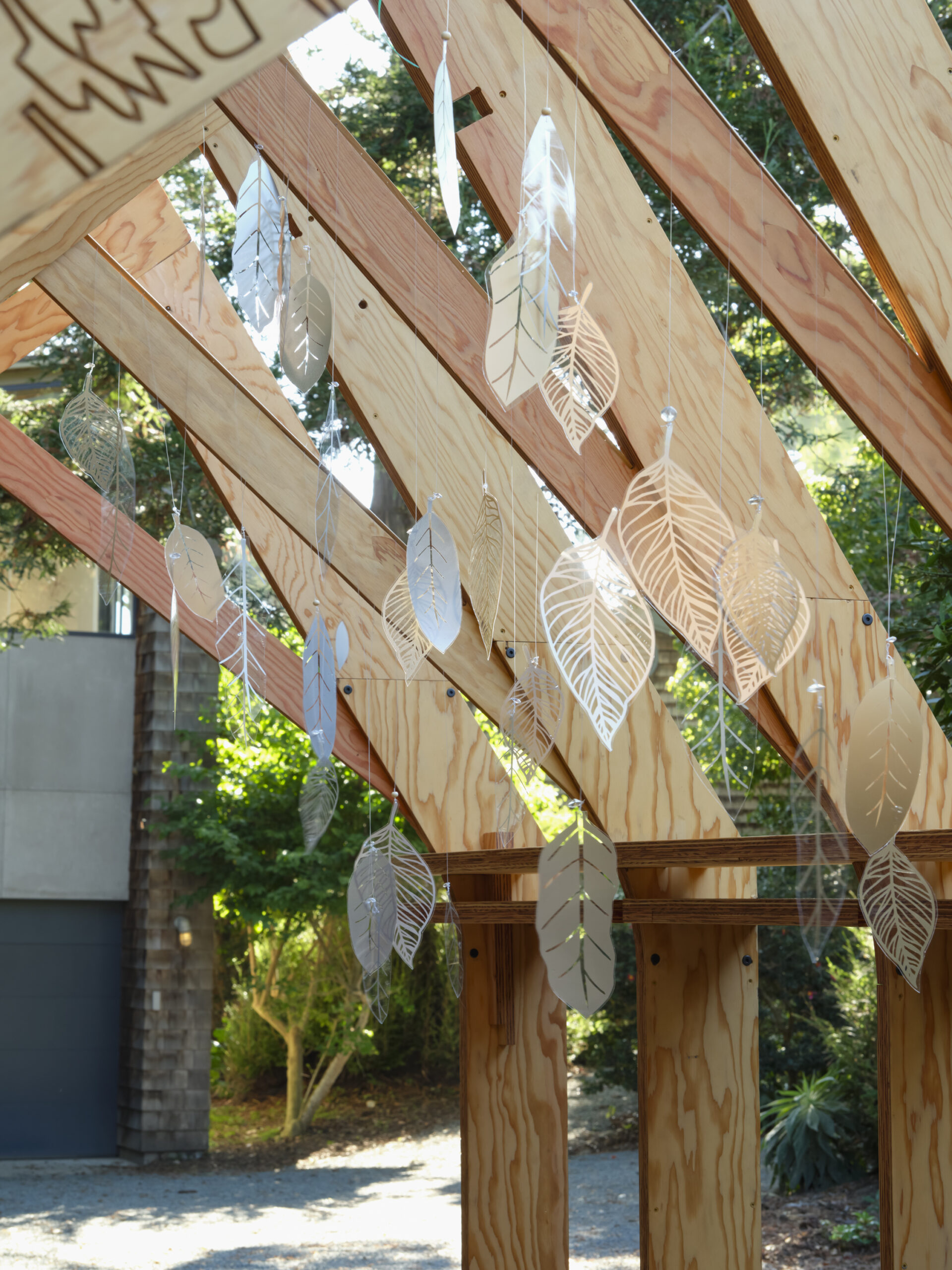
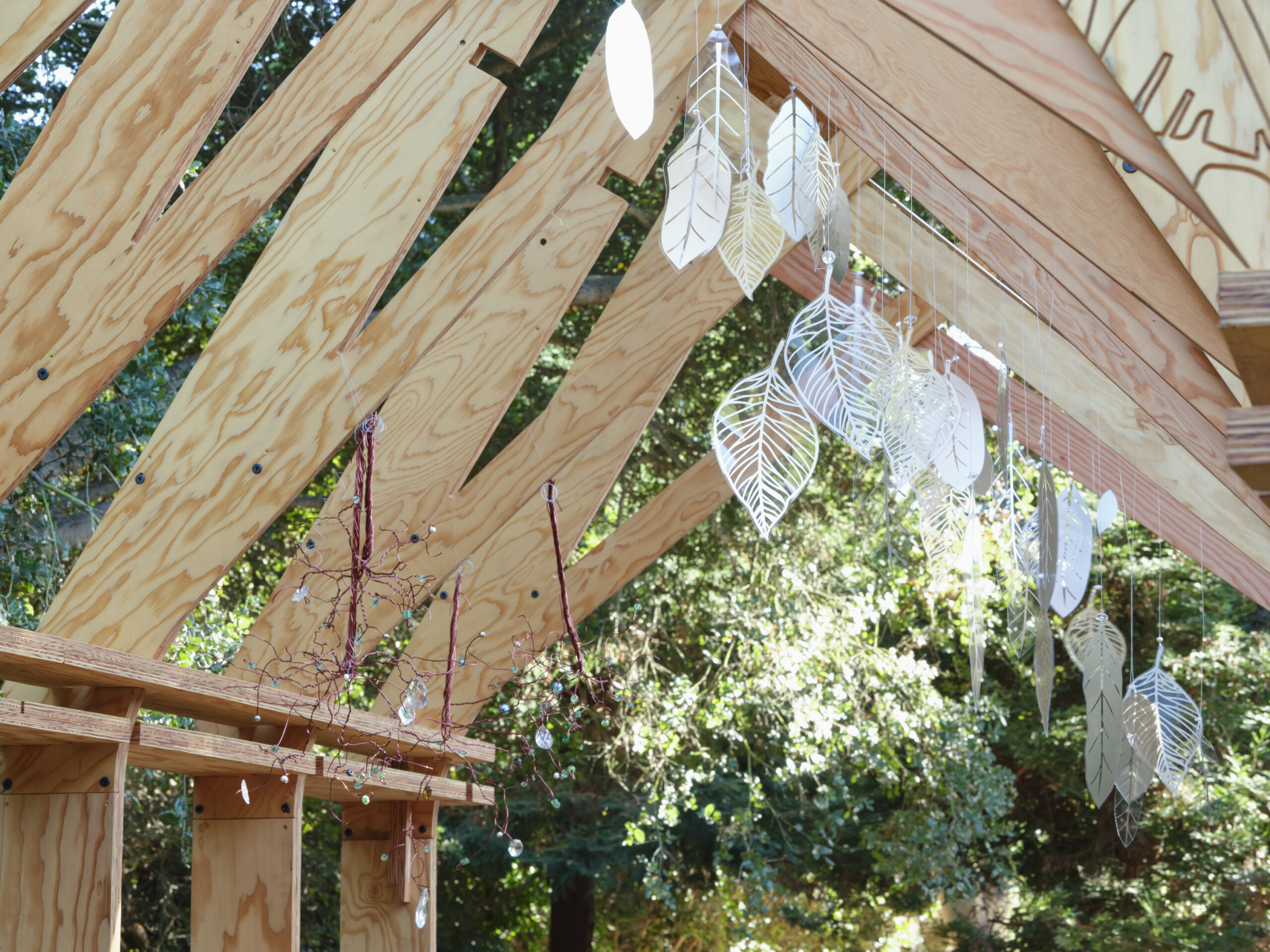
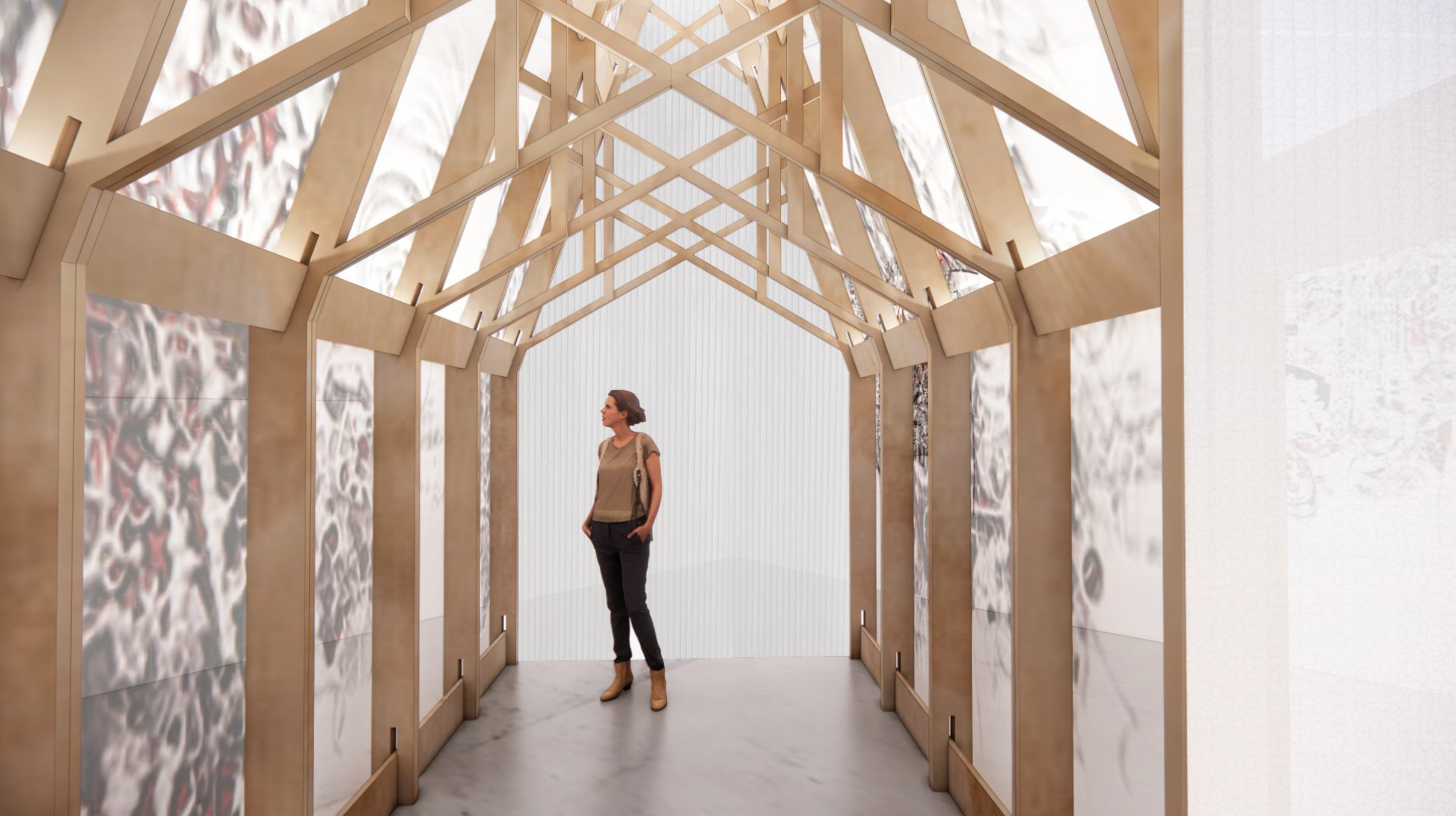
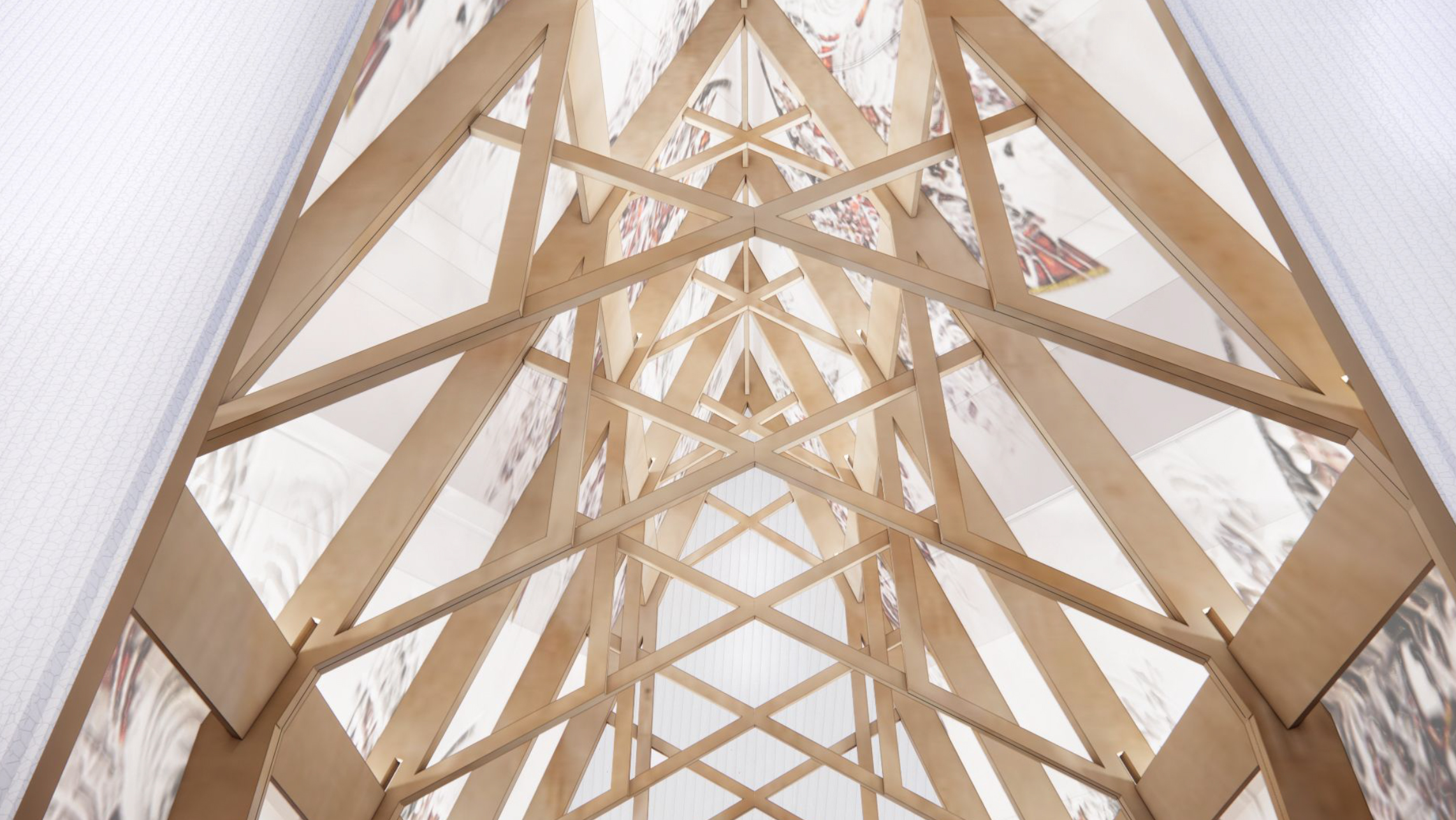
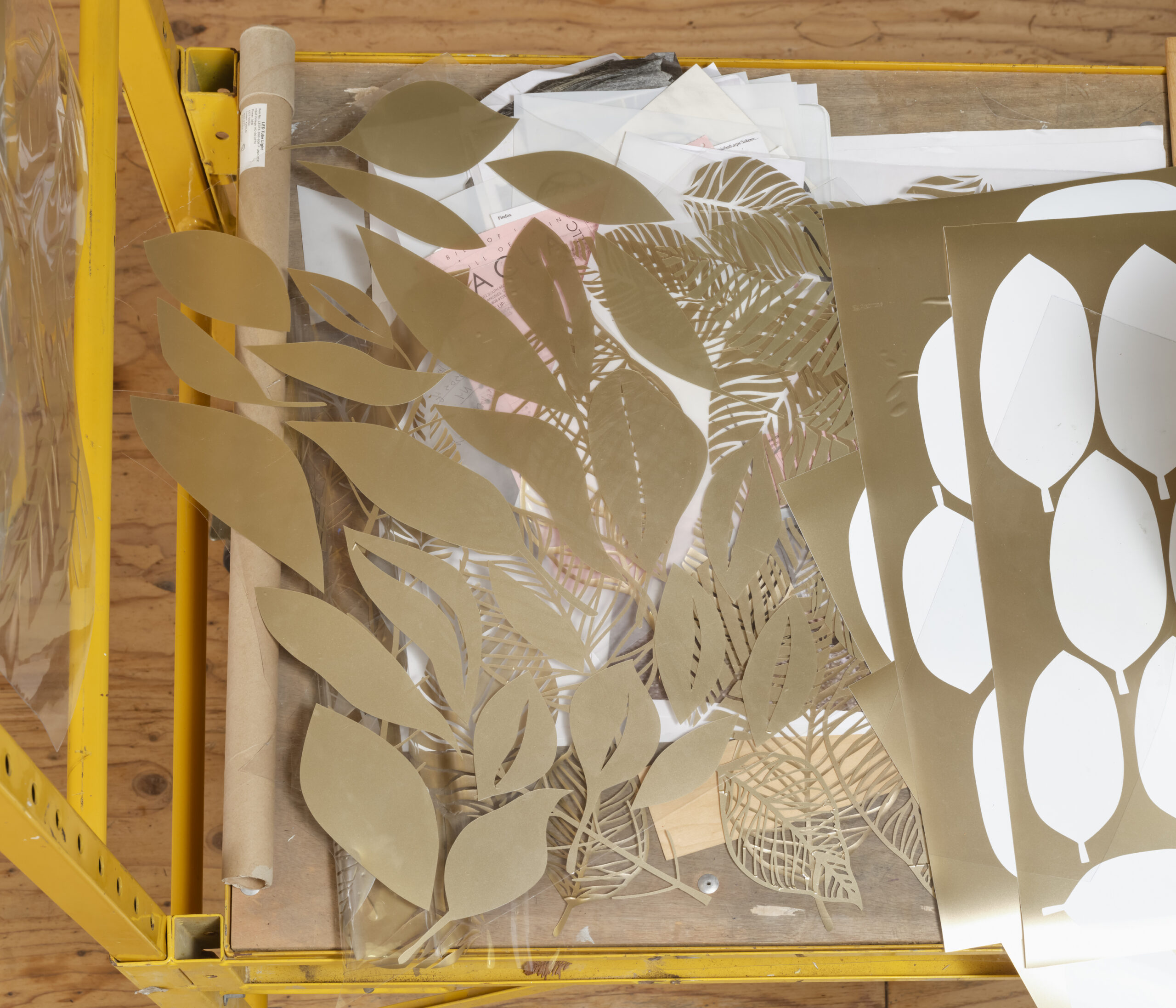
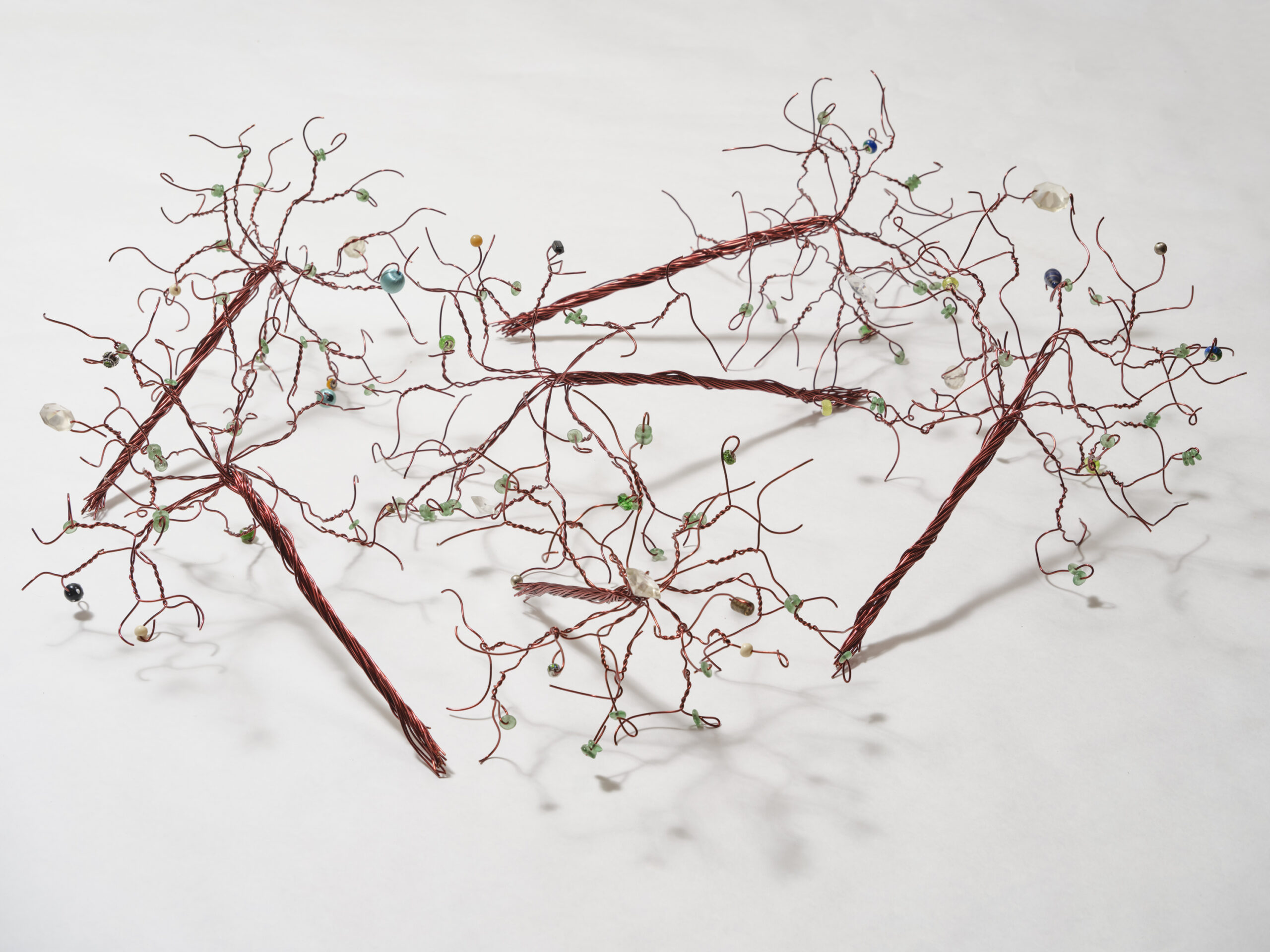
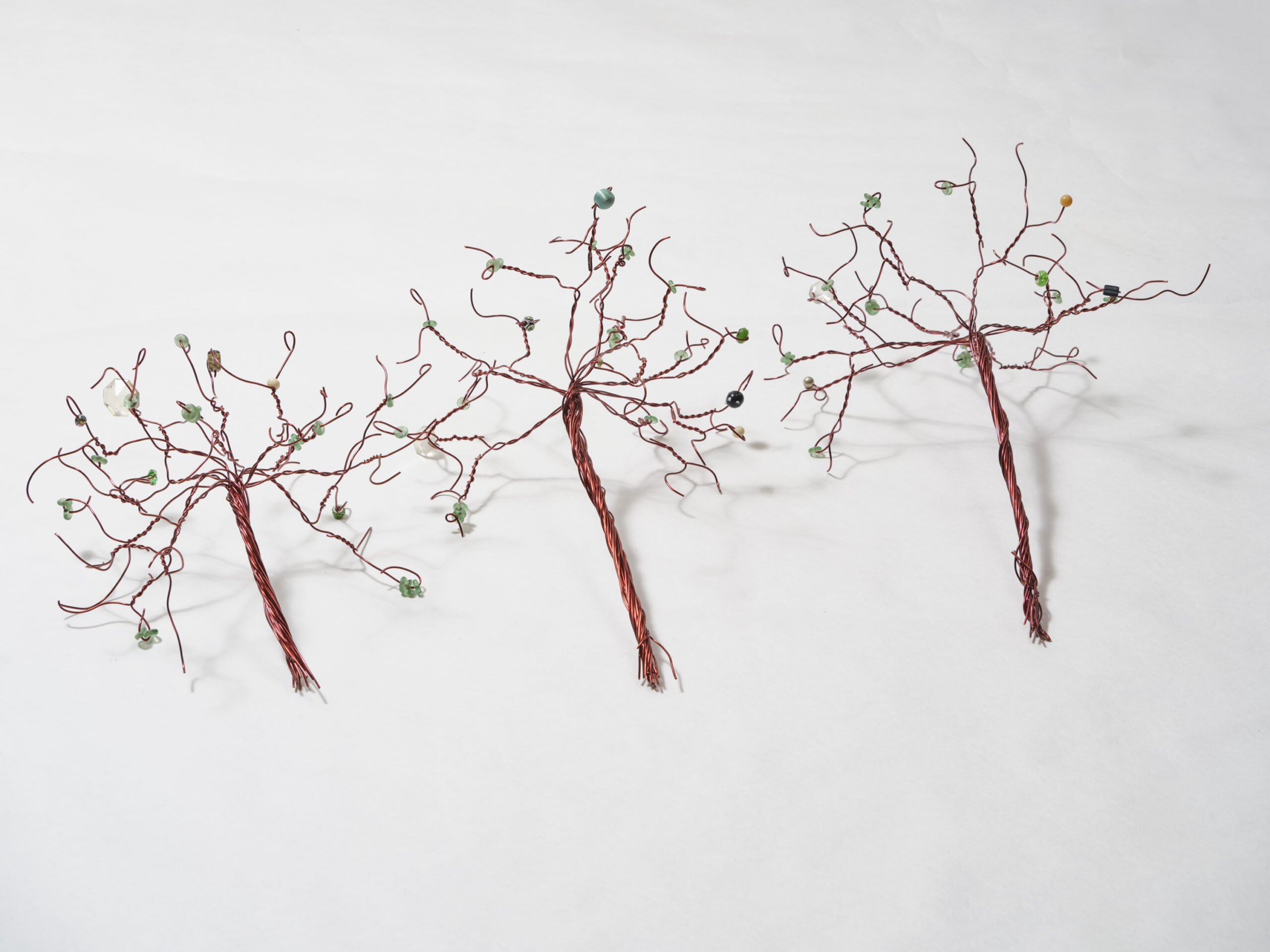
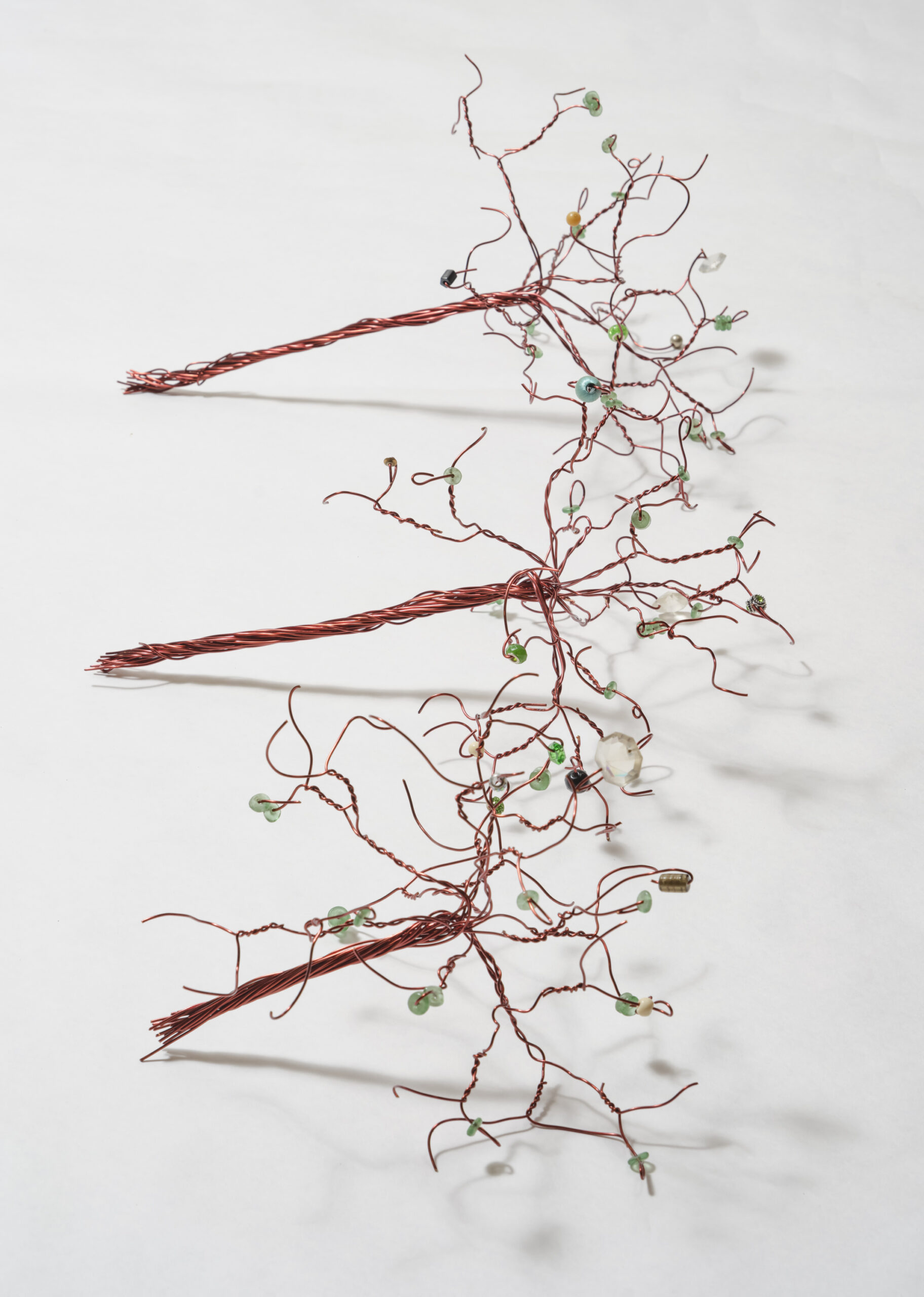
My one-person exhibit The Invented Land was exhibited at The Lancaster Museum of Art and History, Lancaster, California (Greater Los Angeles area) in 2024. The exhibit is accompanied by a book produced by the museum, with an introduction by Andi Campognone, museum director, and essays by Leslie Jones, Curator of Prints and Drawings at Los Angeles County Museum of Art 2005-2023 and Mark Arax, author of The Dreamt Land, which explores the histories and challenges of California’s water distribution system.
The drawings, tapestries, maps and walk in installation that comprise this exhibit are based on the subject of industrial agriculture/factory farming, the modernization of how we grow food and also the significant transformations this type of farming has made to the environment and our society. This body of work focuses on California’s San Joaquin Valley, the fertile land in the middle of the state which grows a substantial portion the world’s food. California’s verdant farmland plays a significant role in the use of natural resources, our global food supply, and population demographics; however, the way it was used for many generations is rapidly transitioning with our physical needs and changes in climate. Through my investigations of land, water, and the architecture of modern-day factory farming, I am interpreting ecological decline, man’s imprint on the land, natural cycles, and the changing climate, as well as how identity is tied to place and how place is experienced both currently and historically.
Programming with the event, including a talk by Rosanna Xia, a Pulitzer Prize finalist and an environmental reporter for the Los Angeles Times who directed the award-winning documentary film “Out of Plain Sight,” and is the author of “California Against the Sea”, Visions for our Vanishing Coastline, was a preview event for Getty Pacific Standard Time: Art & Science Collide.
The Invented Land is traveling to The Bakersfield Museum of Art, opening January 2026. The book will be re-issued with additional work and essays by Shana Nys Dambrot, art critic, curator and author, Ian James, staff writer for the Los Angeles Times, whose work focuses on water, Victor Gonzales, Curator of Collections and Exhibitions, The Bakersfield Museum of Art, and Andi Campognone, curator, author and filmmaker and Manager/Curator of The Lancaster Museum of Art and History, 2011-2024.
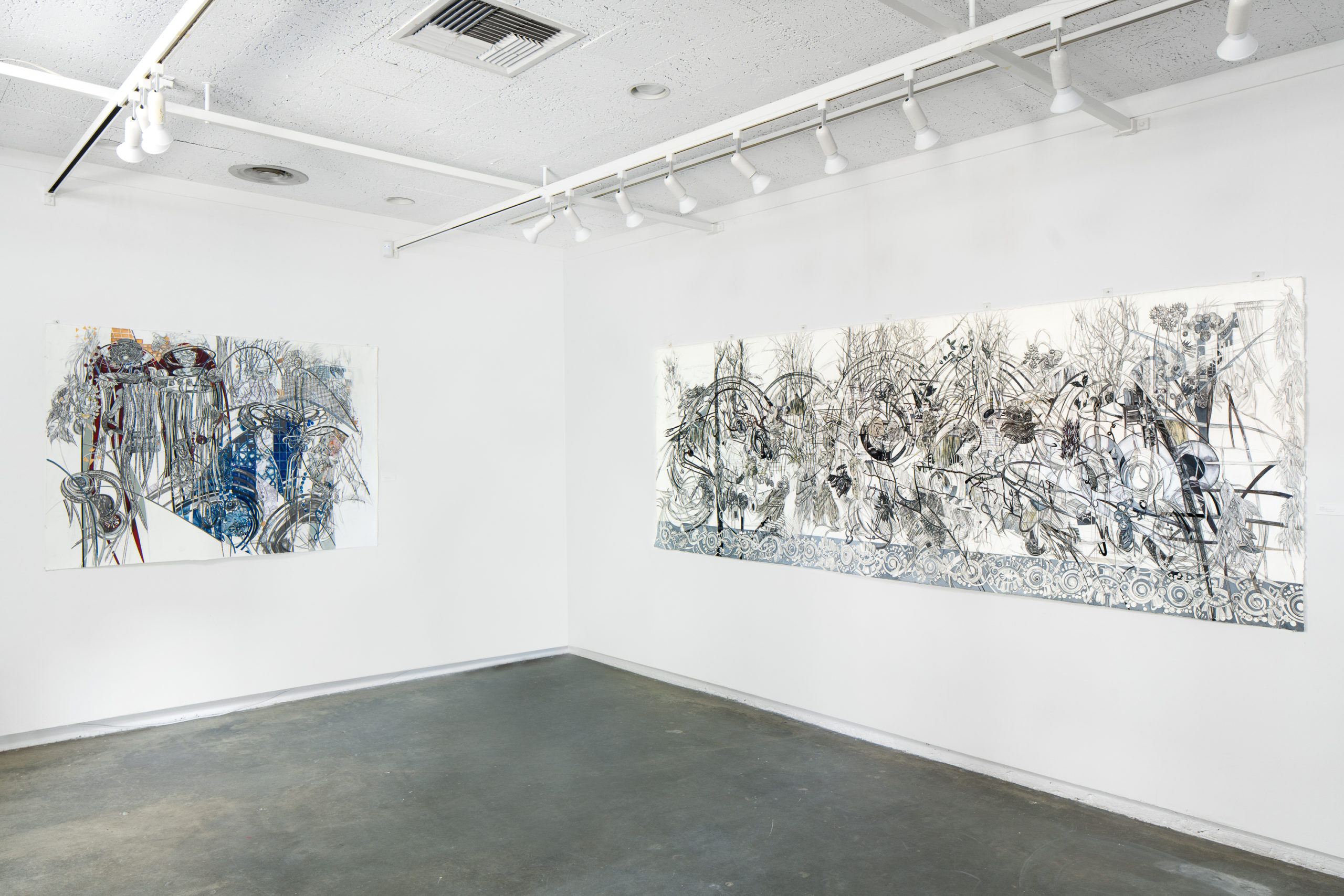
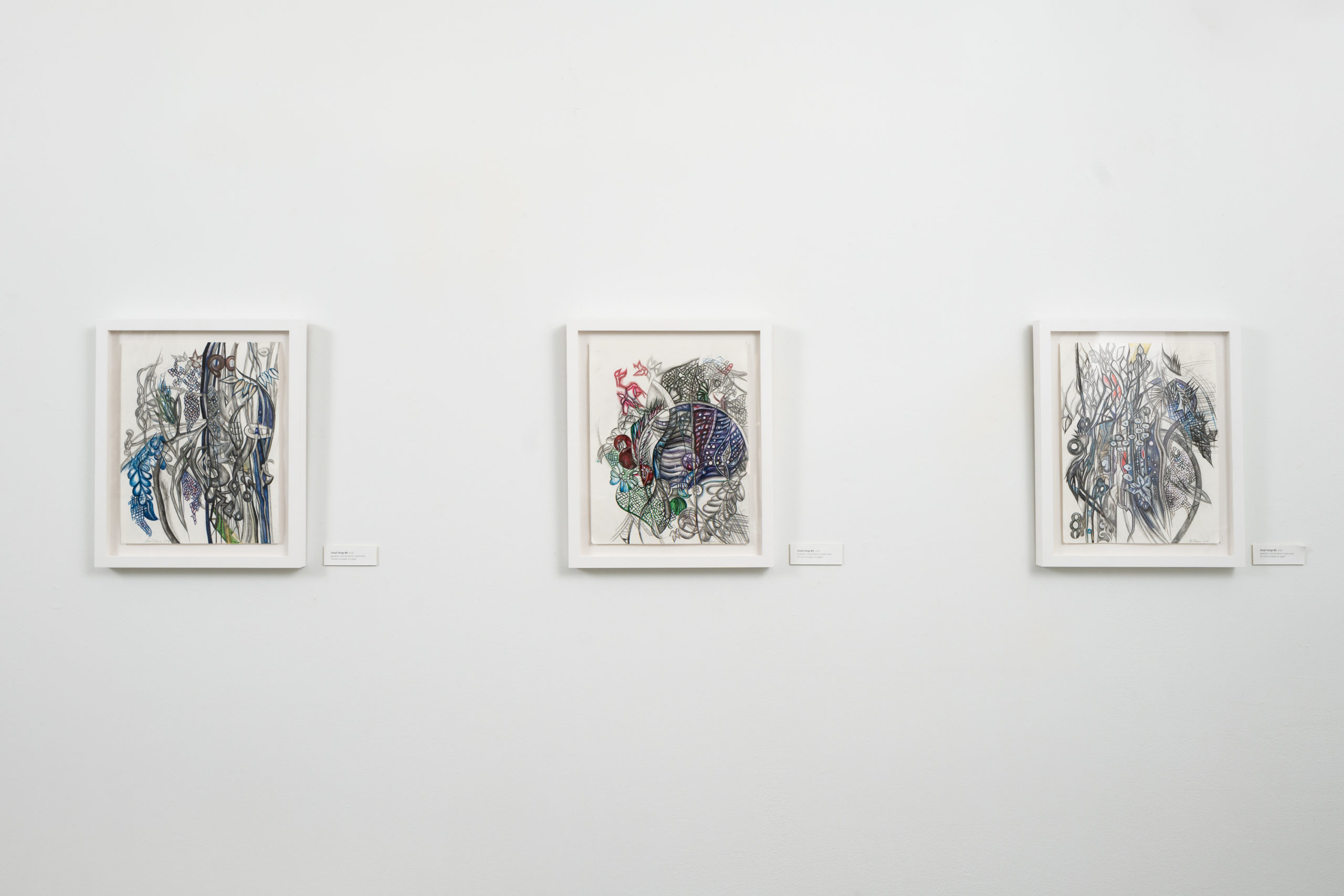
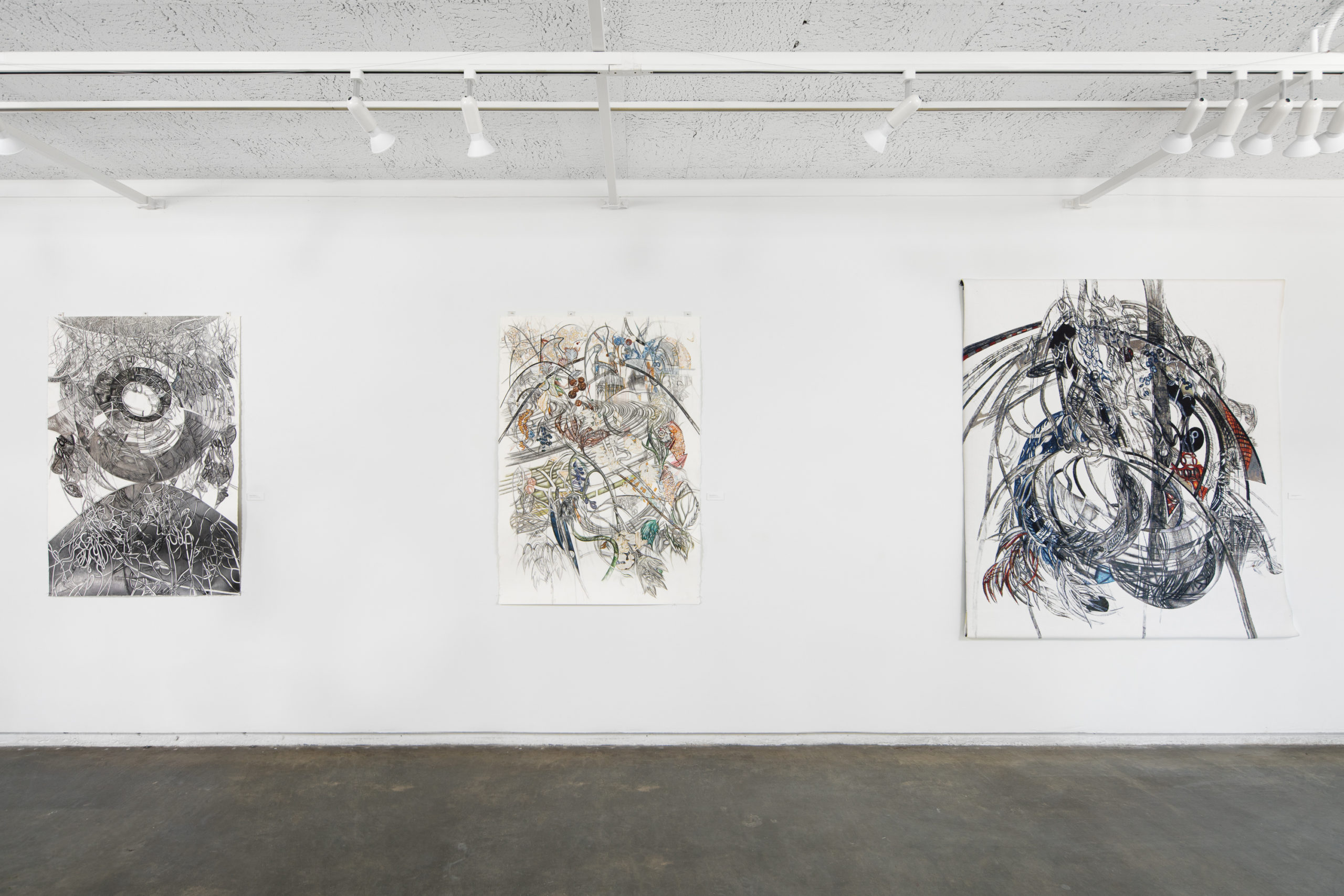
Ann Diener’s drawings and installations are multi-layered narratives, which investigate the social and political ramifications of the built environment. Referring to land, culture, time and memory, the works move beyond geography to engage with the issues of science, social class, migration and the anthropological layers of place.
On view are primarily large-scale drawings which, at a glance, are high energy, high contrast, graphic and unrelenting. Despite the obvious boldness, the frenzy is controlled and orchestrated. The draftsmanship is precise, clean and obsessive. After the first awe of encountering Diener’s work, the intimacy of detail rewards, parts exuding that initial sense of energy yet simultaneously the essence of stillness. Diener retains the white of the paper in every piece and it plays an important role. As the work is presented unfamed, the white flows onto the gallery walls. The spatial depth is fractured but limited and without glass or plexi or framed borders, the distance between the viewer and delicate graphite is eliminated. Stepping up close, there are layers and layers to discover beyond pencil lines: inks and shards from prints, drawings within drawing, suggestions of flora, pathways, grandiose architecture, something you might find at a rodeo or on your kitchen table.
Though you may never get past the visual glory of the work, the details begin to hint at the conceptual underpinnings and themes Diener explores: history, geography and the politics of space. “The Power of Place” has tremendous significance to all of us in our communities, as world citizens, as beneficiaries of earlier land-grabs. Richly historical and yet utterly contemporary, place IS power, defined in a myriad of ways personal and political.
Constance M. Kocs, Gallery Director, Pierce College Art Gallery
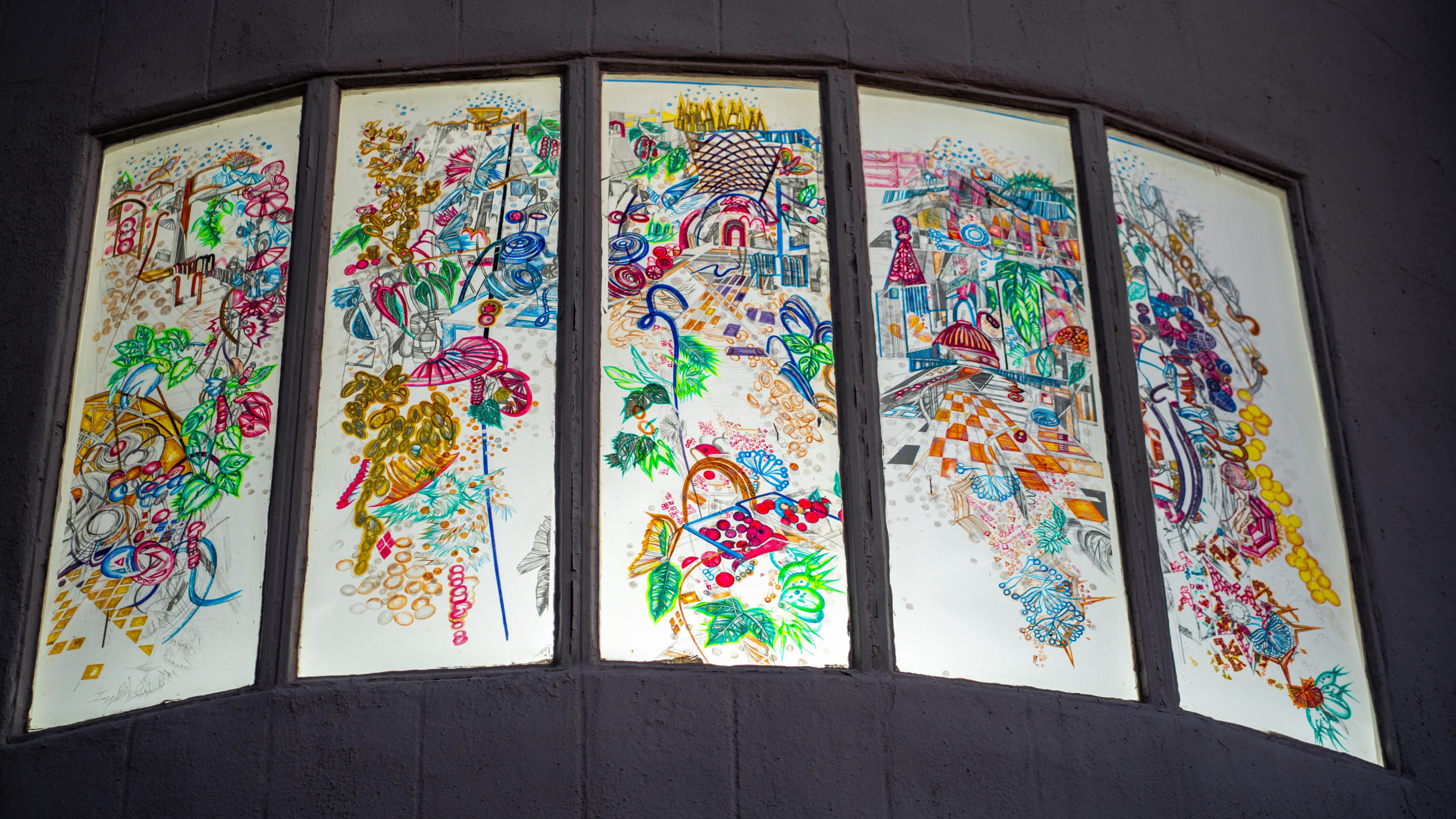
A New Place, 2022, five panels each 60 x 22 in., ink on Mylar

Through drawing, Ann Diener maps the layered history of place, charting ways that spaces are changed over time by those who inhabit them. While space is determined by nature and delineation of physical dimensions, place is crafted and reflects the personal and unique nature of the subjective human experience. The drawings in the Mandarin Plaza exhibit are a build-ups of objects, architecture, natural and art history, portraiture and patterning that she overlaps, combines and re-makes. One form annexes and informs the next while large swaths of negative space remain unclaimed. Connections arise among the various unrelated sources until a story unfolds, one that reflects the histories of its inhabitants.

On the surface, Genoa has all the trappings of a modern port city; however, upon closer examination, vestiges of its history as a medieval merchant-pirate superpower slowly reveal themselves. over the period of a year, i made a series of drawings that map the layered history and diverse inhabitants of a place henry James once described as “the crookedest and most incoherent of cities.” consciously unmoored from a linear narrative, the work addresses how successive occupants interacted with and “overdrew” the city, creating their own ephemeral place—existing for a moment only to be drawn over again and again. the portrait reflects the complex dimensionality of place by evoking time periods, life style, class, and social values through a constructed world of multiple vantage points.

For the last ten years, Ann Diener has been mapping the layered history of the places she knows best in her large-scale drawings: rst, the transformed Ventura farmland of her childhood and, more recently, the sprawl of Los Angeles as demarcated by its fraught aqueduct. However, Diener’s drawings are not road atlases (nor GPS devices) plotted by compass coordinates, but a local’s hand drawn directions delineated by memory’s landmarks. Perhaps even more accurately, her drawings are stratigraphic contexts—careful records of archeological excavations. Not only geographic, but also temporal, they chart the way a location is inevitably changed by its inhabitants over many generations creating what the artist calls a “hybrid space”.

For her first museum project, artist Ann Diener has translated her dynamic works on paper and canvas into a massive drawing on the walls of the University Art Museum’s Nachman Gallery. Diener, known for her large compositions which combine abstraction and guration, drew upon her commanding use of scale to tackle the voluminous space of the gallery. In Ascent (2010) Diener has created a looming bower representing the coalescence of her previous works that explored changes wrought in the southern California landscape and her more recent interest in the story of the Tower of Babel.

The concept of “growth” speaks to the many layers of Ann Diener’s newest body of work. It aptly describes her development as an artist as she dives deeper into her subject matter. She continues to challenge herself by increasing scale, complicating the perspective, and growing her vocabulary to express an intricate relationship to the land and nature on a personal and universal level. The swirling velocity of these images intertwines observations of the “natural” world as she sees it today with recollections of her past. She weaves in the energy of her memories in an attempt to reconcile what was to the current landscape that is-the rural farmland of her youth to the suburban industrial agricultural industry of the present.

Ann Diener’s current drawings focus on both natural and man-made fences and borders, a time-honored subject in traditional landscape painting dating back to the work of English luminaries, Thomas Gainsborough (1727-88) and John Constable (1776-1837). Both artists illustrated the sweeping effects of the enclosures movement on the topography of the landed economy at the end of the eighteenth century as the rural landscape was transformed from unmarked and undivided common land owned and used by all, to the fenced-in, exclusive private property of the emerging upper middle classes. The resultant image of the landscape as a ‘patchwork quilt’ — most noticeable, of course, from the air — has come to define all subsequent representations of the genre, so that once contrived images of hedgerows and subdivisions have become ‘naturalized’ to create their own form of cubistic beauty.